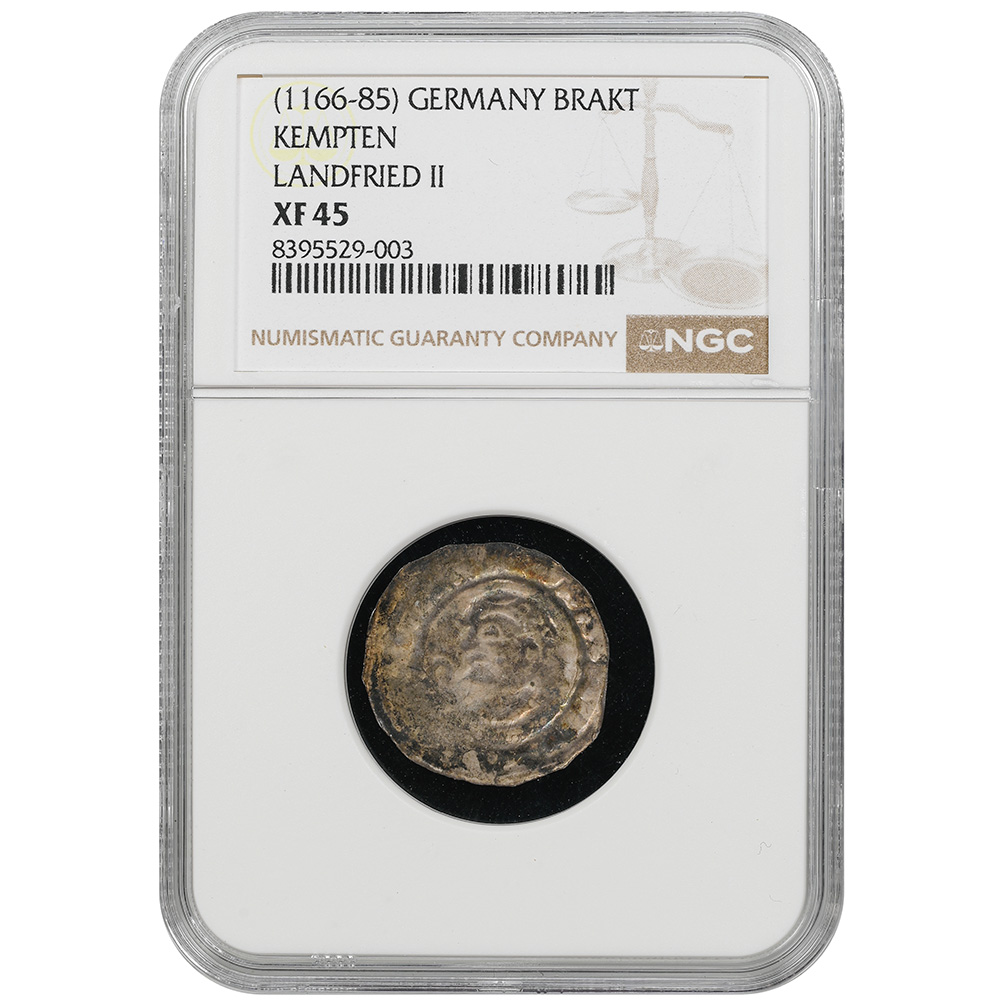
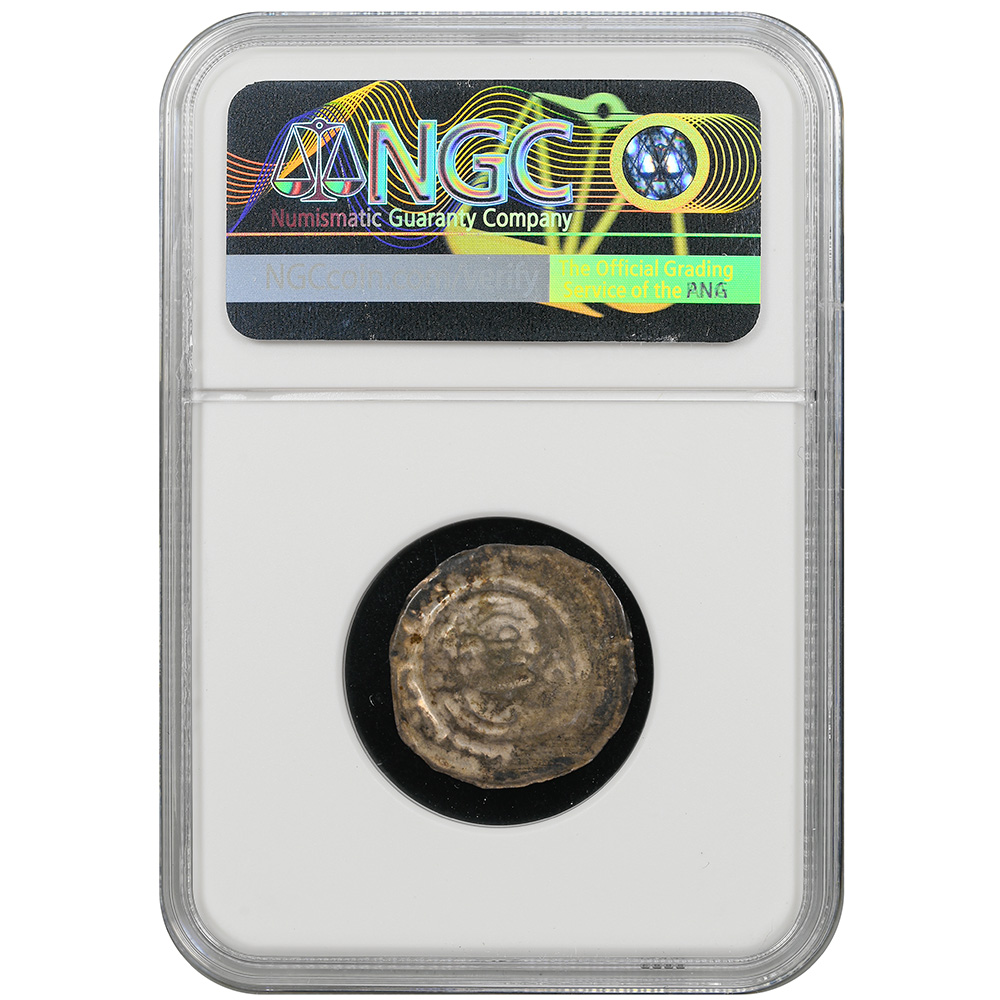
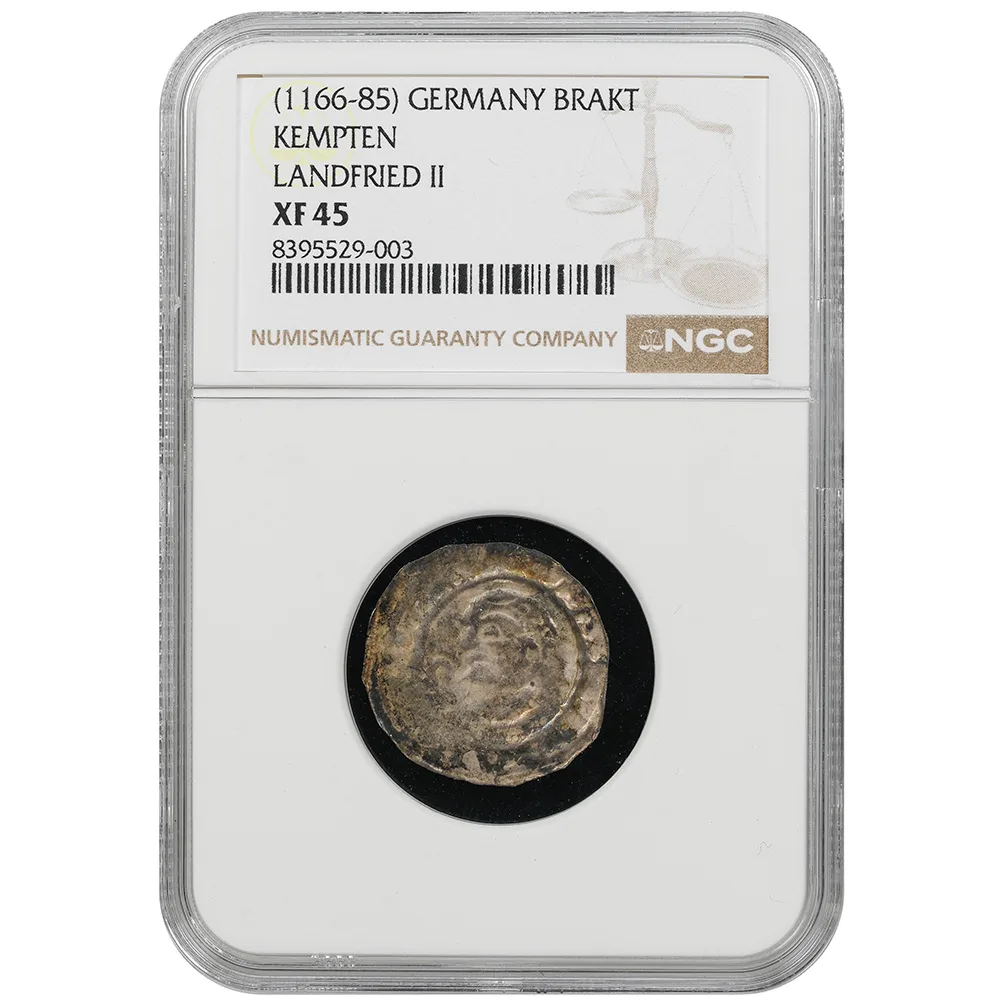
CVC & Collectables presents this medieval silver Bracteate was issued by the Abbey of Kempten during the rule of Abbot Landfried II, 1166-1185. These remarkably thin, one-sided silver coins were characteristic of medieval German monetary systems. This example is attributed as Berger 2559, Gebhart 1b, and CC 106.1 and has been certified NGC XF45. The type is cataloged as a silver denier associated with Landfried II and the Abbey of Kempten.
Coin Highlights:
- Region: Germany, Holy Roman Empire
- Issuing Authority: Abbey of Kempten
- Ruler: Abbot Landfried II
- Date: 1166-1185
- Denomination: Denier / Pfennig
- Type: Bracteate
- Composition: Silver
- Standard Weight: Approximately 0.35 gram
- Numista Number: N# 111836
- Berger: 2559
- Gebhart: 1b
- CC: 106.1
- Grade: NGC XF45
- Design: Stylized medieval portrait/device struck in high relief
- Reverse: Incuse impression created by the extremely thin, one-sided striking process
- Certification: Professionally authenticated and graded XF45 by NGC
The standard catalog entry identifies this Landfried II issue at approximately 0.35 gram in silver.
Design & Devices
Bracteates were made from extremely thin silver flans and struck using a single die, producing a raised design on one side with the corresponding impression visible on the other. The technique allowed surprisingly bold designs to be produced while using only a small amount of silver.
The thin and fragile construction of these coins makes surviving medieval examples particularly distinctive compared with conventional two-sided European coinage.
Historical Significance
During the 12th and 13th centuries, numerous German bishops, abbots, dukes, counts, and other territorial rulers possessed their own local coinage. Bracteates became an important form of the silver pfennig, particularly because their thin construction allowed broad and elaborate designs despite their very low weight.
Collectibility
This Kempten issue offers a direct connection to 12th-century medieval Germany, combining ecclesiastical history, distinctive bracteate production, and an attribution to Landfried II. Certified NGC XF45, it is a well-preserved example of a fragile silver coin produced more than eight centuries ago. Find more alike here!