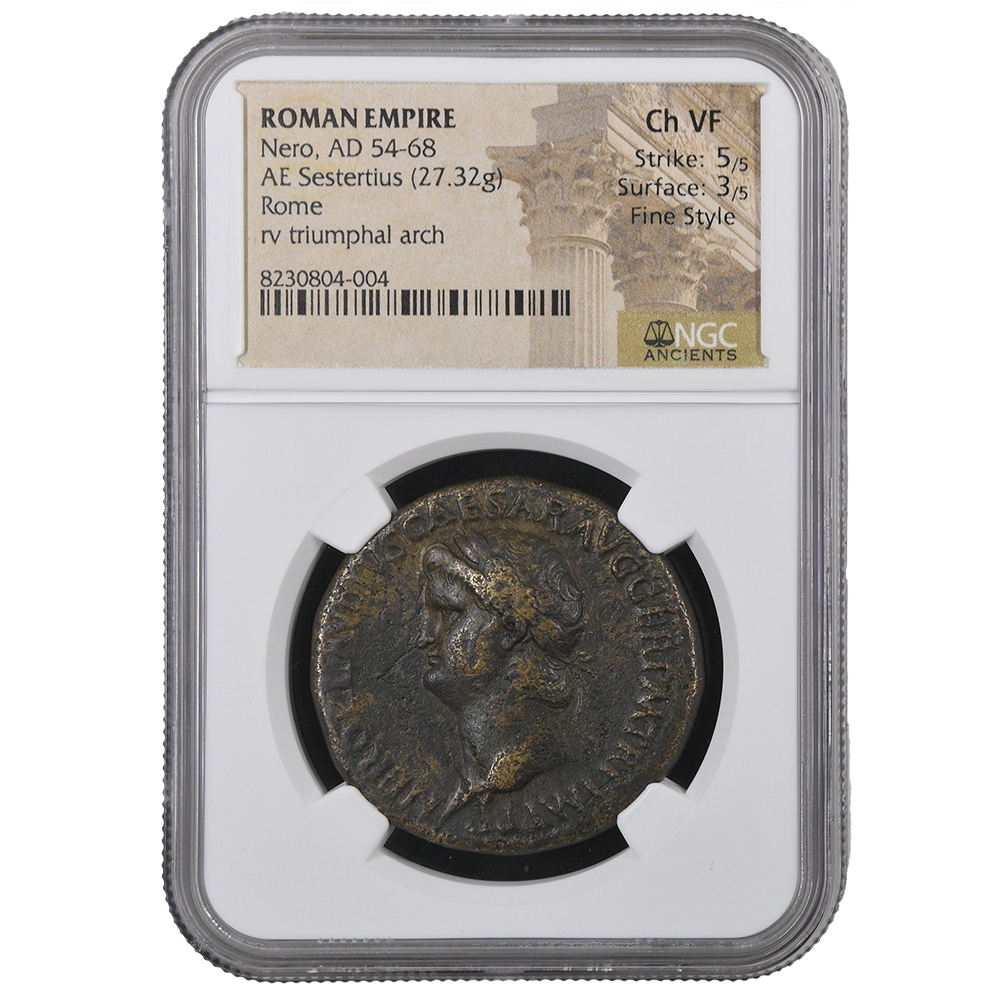
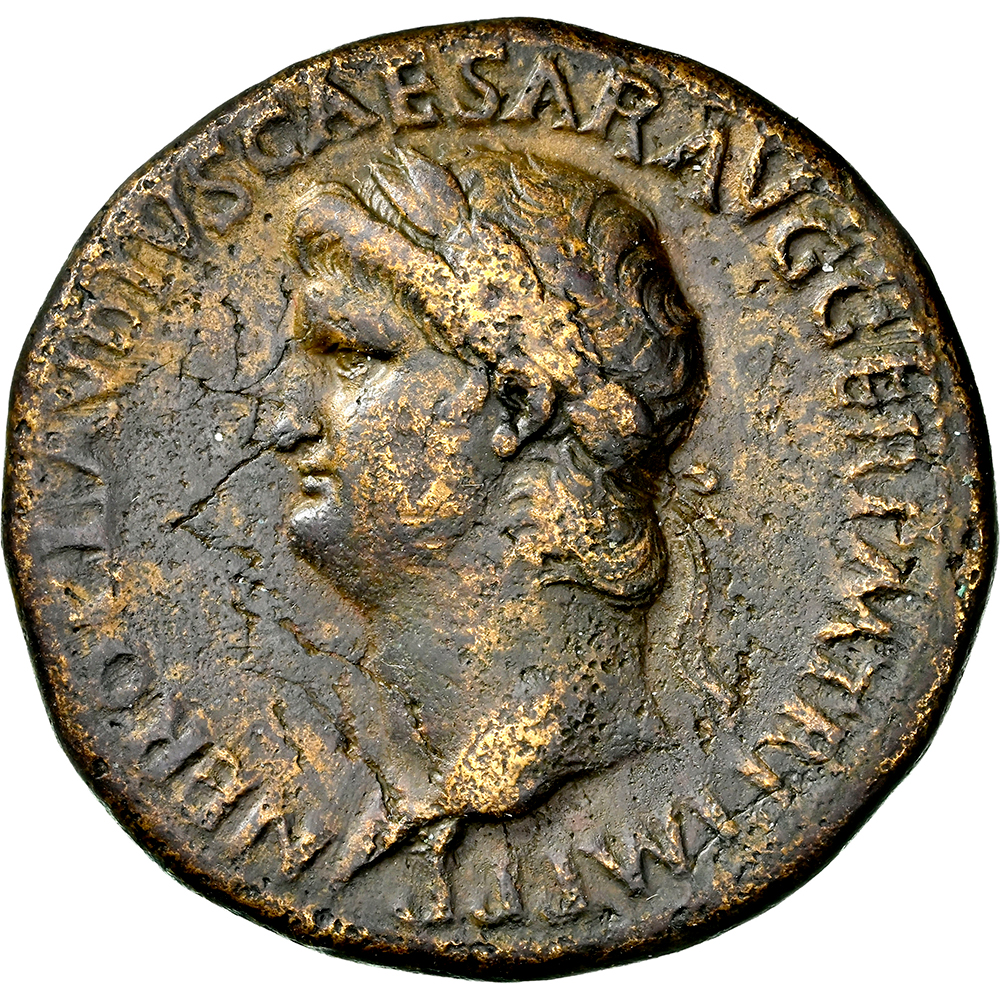
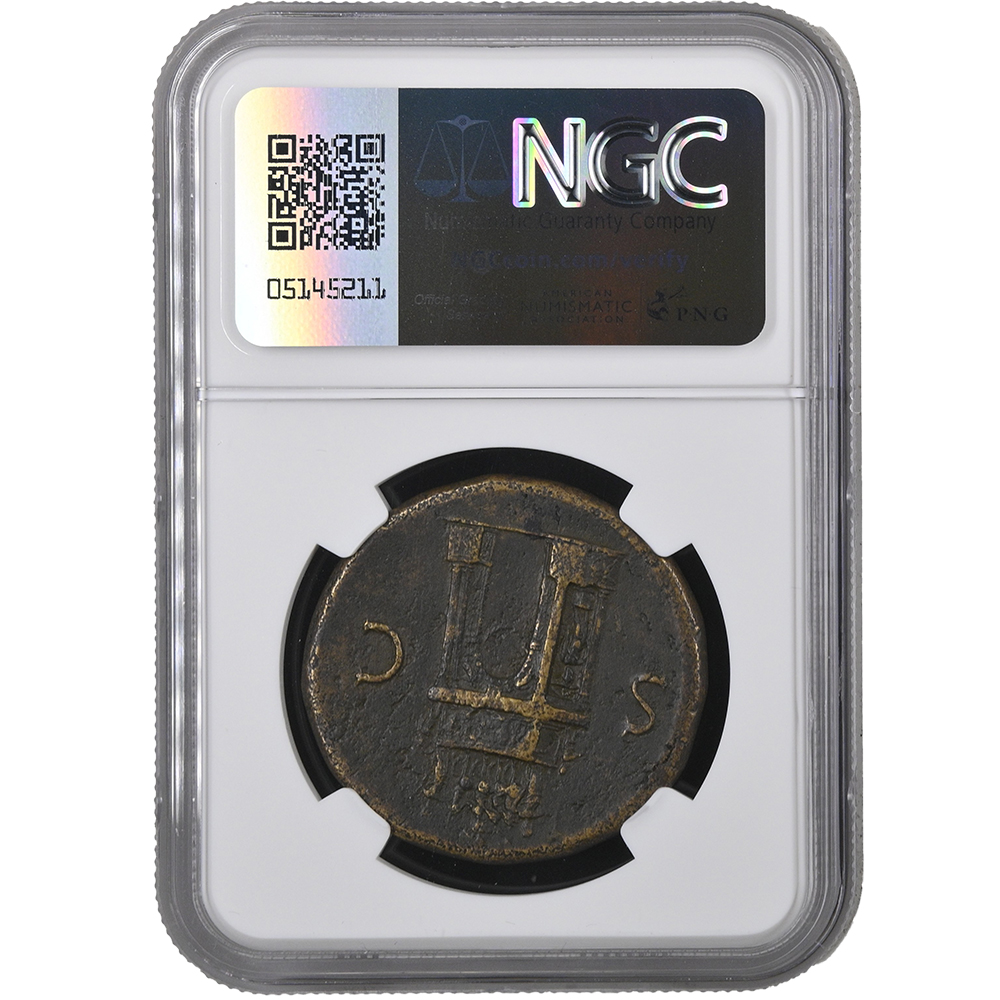
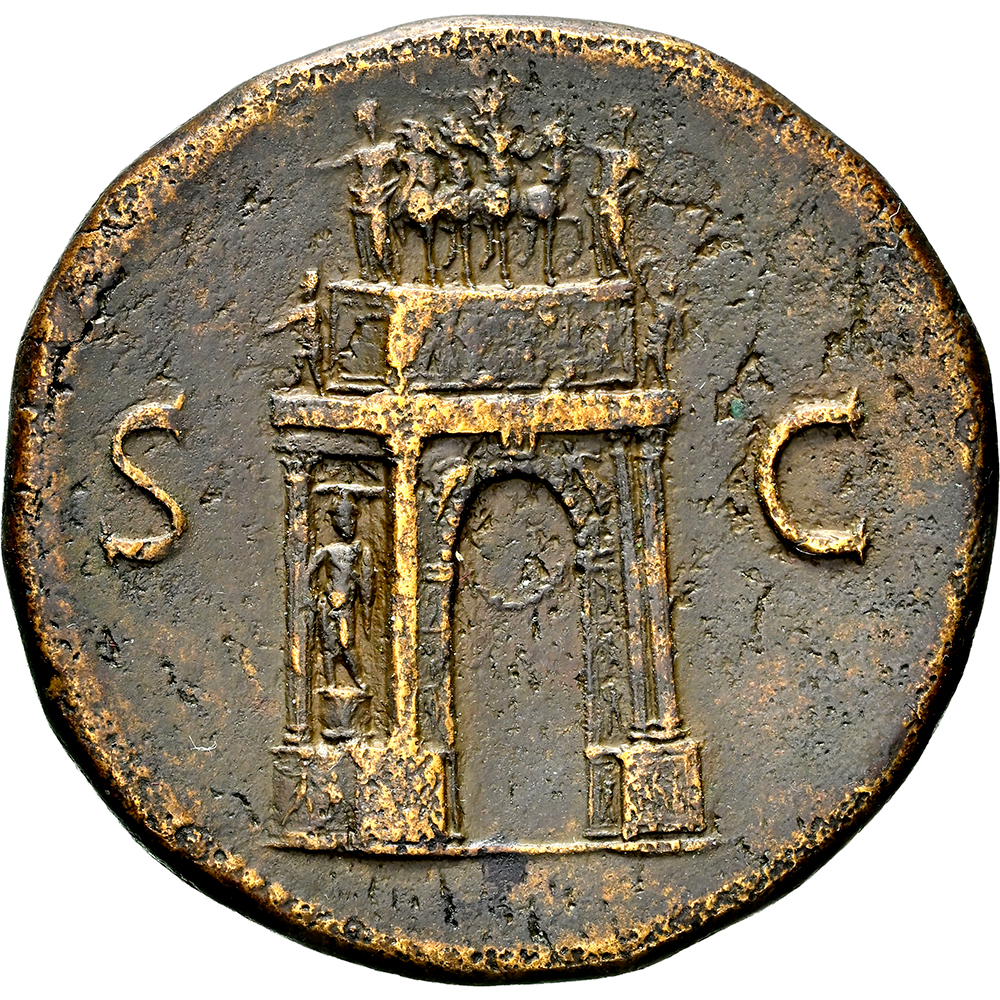
CVC & Collectables presents this AD 54-68 Nero Roman Empire AE Sestertius, a remarkable coin from the Roman Empire. Graded Choice Very Fine (CH VF) with a “Fine Style” designation by NGC, this coin features a detailed portrait of Nero and a reverse depicting an intricately designed triumphal arch, celebrating the grandeur and propaganda of his rule.
Coin Highlights:
- Issuer: Roman Empire
- Reign: Nero (AD 54-68)
- Denomination: AE Sestertius
- Composition: Bronze
- Grade: NGC CH VF Fine Style — Well-preserved details with sharp artistry.
- Obverse: Head of Nero, laureate, facing left.
- Inscription: NERO CLAVDIVS CAESAR AVG GER P M TR P IMP P P
- Translation: “Nero Claudius Caesar Augustus Germanicus, Pontifex Maximus, Tribunicia Potestas, Imperator, Pater Patriae.”
- Reverse: A triumphal arch decorated with statues of Pax, Mars, and two soldiers, topped by Emperor Nero in a quadriga (chariot) escorted by Victory.
- Inscription: S C (Senatus Consultum, “Decree of the Senate”).
- References: RIC I#148, N#246354
Controversies and Decline: Nero’s reign is infamous for his personal debaucheries and extravagances. Allegedly, he was involved in the burning of Rome and known for persecuting Christians. Consequently, his autocratic rule and controversial actions sparked both admiration and opposition.
Collectibility:
This AE Sestertius of Nero is an outstanding example of Roman imperial coinage. The CH VF grade ensures well-preserved details, while the “Fine Style” designation highlights the artistry of the portrait and reverse imagery. With its connection to Nero’s legacy and Roman architectural propaganda, this coin is a must-have for collectors of ancient numismatics. Secure this piece of history today and add a tangible link to one of Rome’s most infamous emperors!
Embark on a journey through time with ancient coins that span from 400 BC to AD 1055 at Chula Vista Coins. Explore a captivating collection of numismatic treasures that offer glimpses into civilizations long past. Uncover the allure of ancient history through this link: Ancient Coins (400 BC – AD 1055)