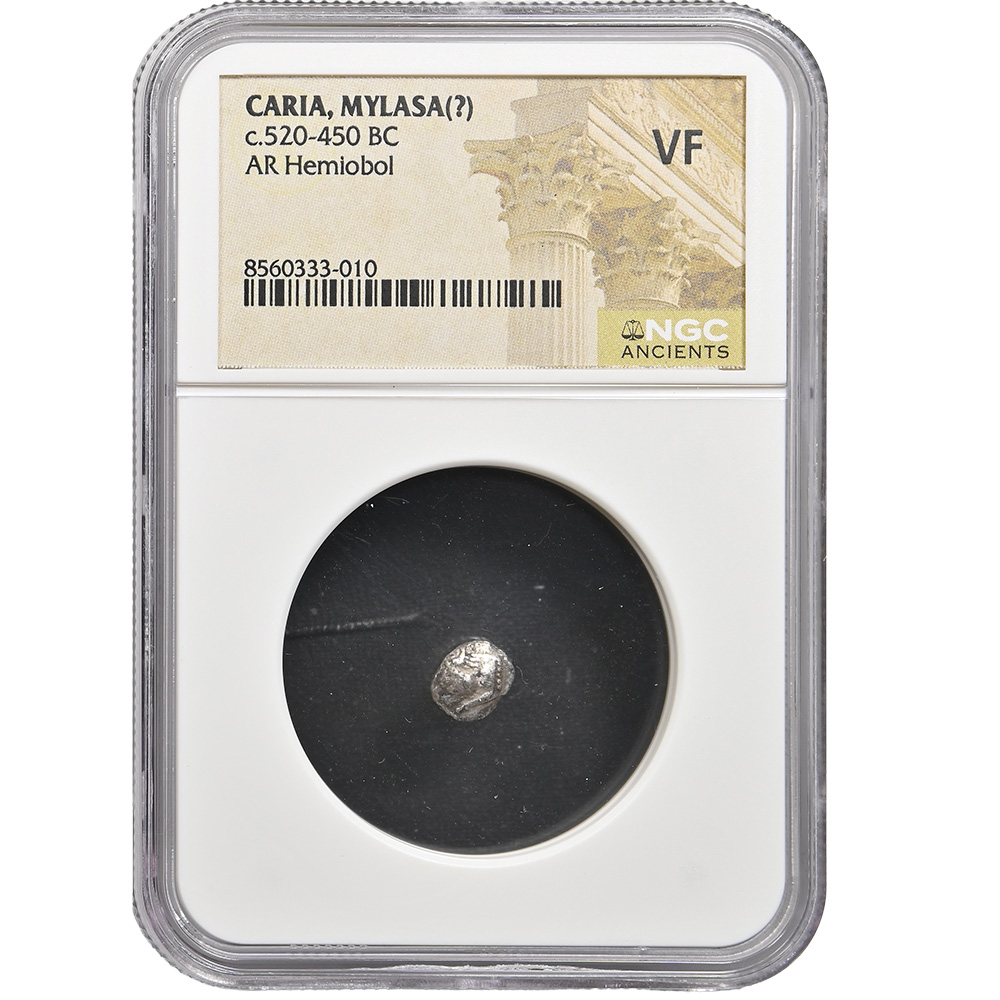
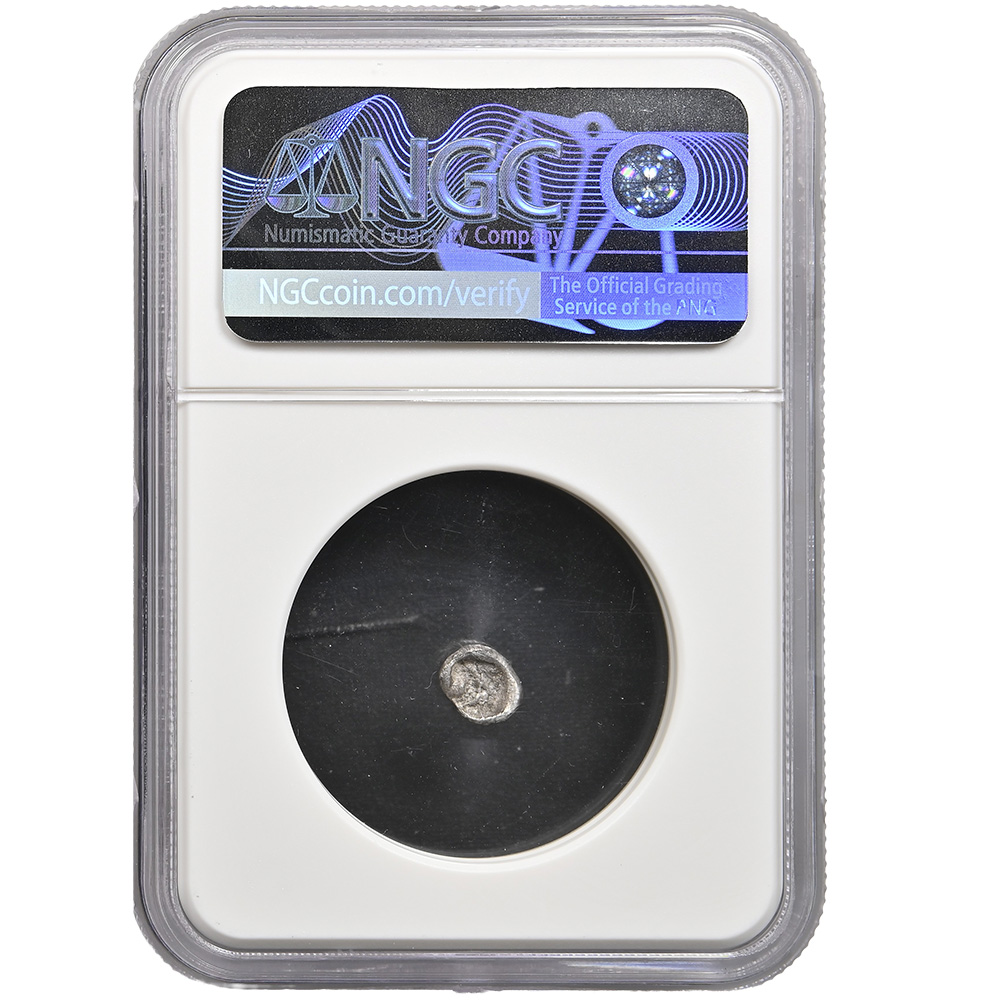
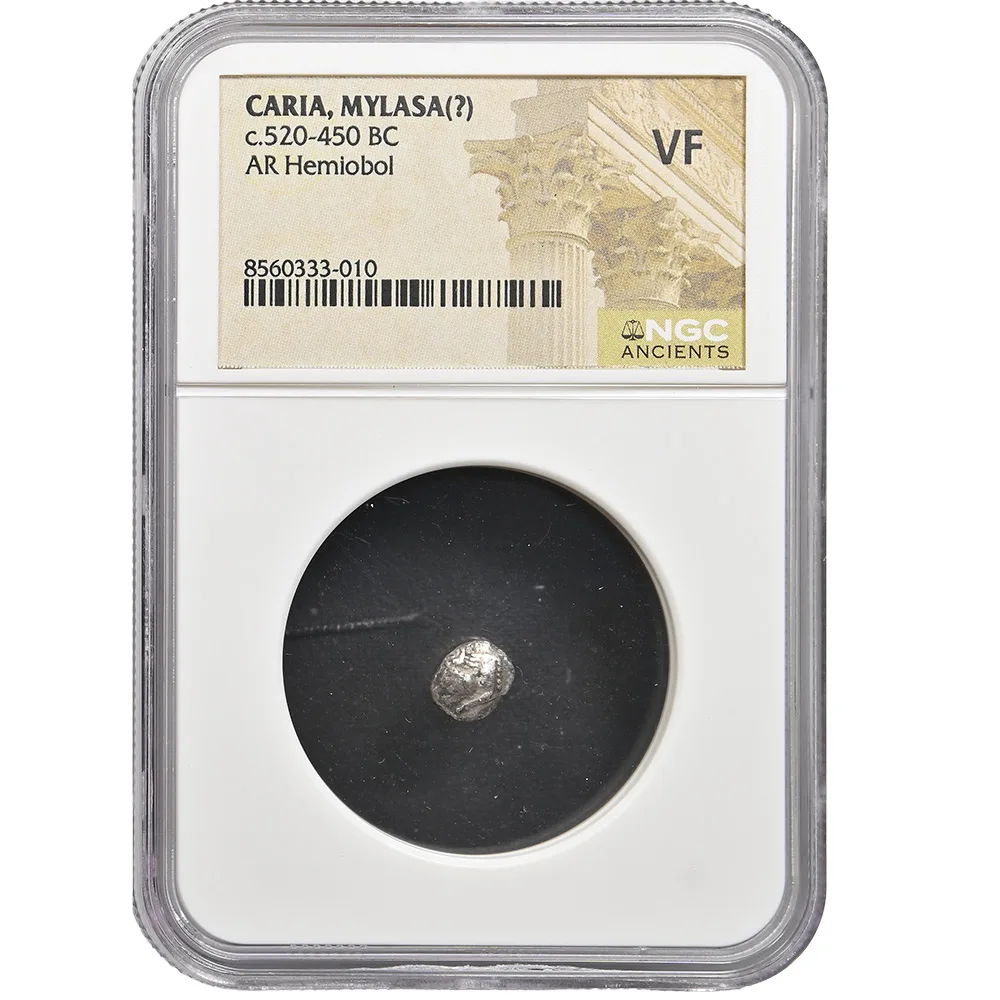
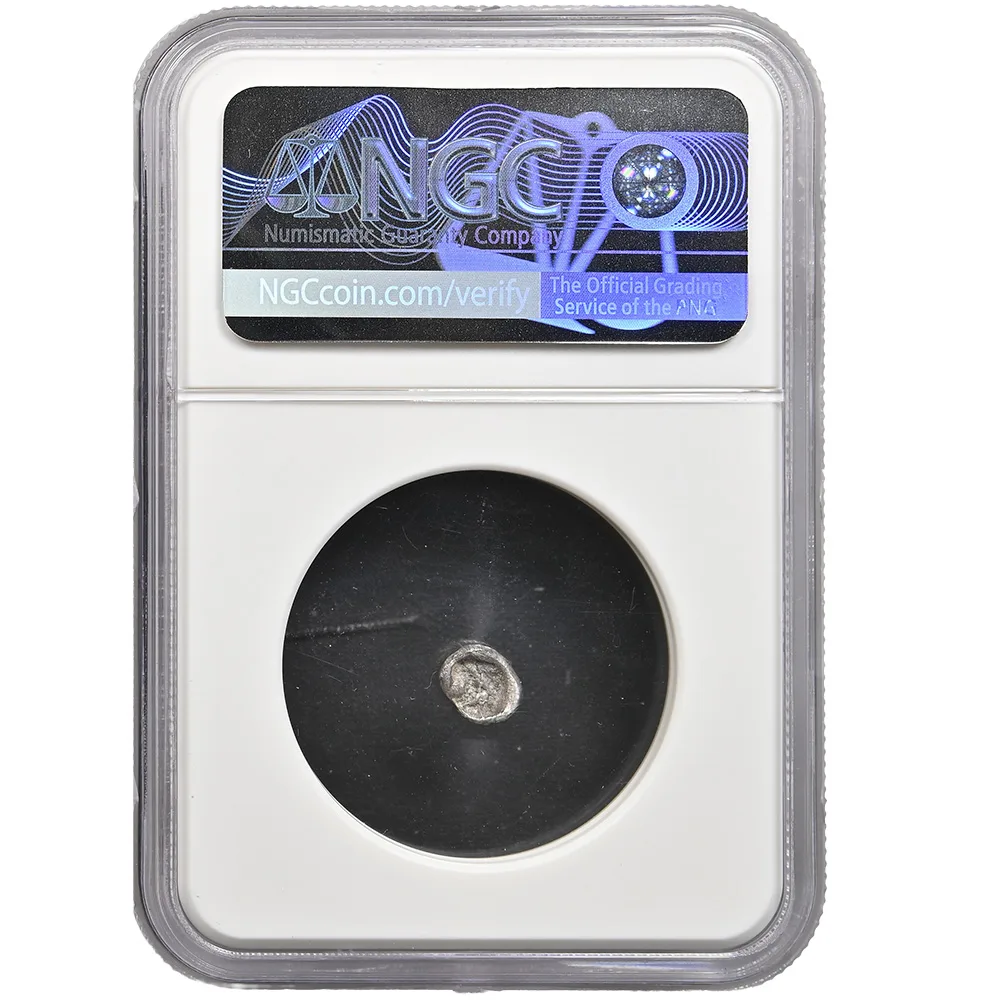
CVC & Collectables presents a ancient Silver Hemiobol, dating approximately 520–450 BC, is attributed to Mylasa in Caria, an ancient region of southwestern Asia Minor, now modern-day Turkey. This miniature Greek silver coin represents the small fractional denominations used in early regional commerce. Certified NGC Very Fine (VF), it offers collectors an intriguing example of early Carian coinage.
Coin Highlights
-
Region: Caria, Asia Minor
-
City: Mylasa (attribution uncertain)
-
Date: Circa 520–450 BC
-
Denomination: Hemiobol
-
Composition: Silver (AR)
-
Period: Archaic / Early Classical Greek
-
Mint Attribution: Mylasa, modern-day Milas, Turkey
-
Production Method: Ancient hammered coinage
-
Grade: NGC Very Fine (VF)
-
Certification: NGC Ancients
-
Certification Number: 8560333-010
Design & Devices
Obverse: Features a small animal-head design, with surviving relief visible despite the coin’s exceptionally small size. The design is consistent with the animal motifs frequently encountered on early Carian fractional silver coinage.
Reverse: Displays a compact incuse-style design, characteristic of early Greek silver denominations. The surviving details reflect the traditional engraving techniques used for miniature hammered coins.
The small size of the coin highlights the precision required of ancient engravers working with fractional silver denominations.
Historical Significance
Mylasa was an important ancient city in Caria, located in southwestern Anatolia. The region developed a distinctive monetary tradition influenced by both Greek commercial activity and neighboring Anatolian cultures.
During the sixth and fifth centuries BC, Caria occupied a strategic position between the Greek coastal settlements and the Persian-controlled territories of Asia Minor.
Small silver denominations such as hemiobols helped facilitate transactions requiring less than a full drachm, illustrating the sophistication of ancient monetary systems.
Collectibility
Ancient Carian fractional silver coins are appreciated for their miniature size, early designs, and historical connection to the development of Greek coinage.
This example is certified NGC VF, with the holder identifying it as a Hemiobol from Mylasa (?), dating circa 520–450 BC. The question mark indicates that the mint attribution is not definitive.
Attribution Note: The supplied specifications for a 0.20-gram tetartemorion dated 420–390 BC describe a different denomination and date range. This listing follows the NGC-certified hemiobol attribution rather than combining the two types.