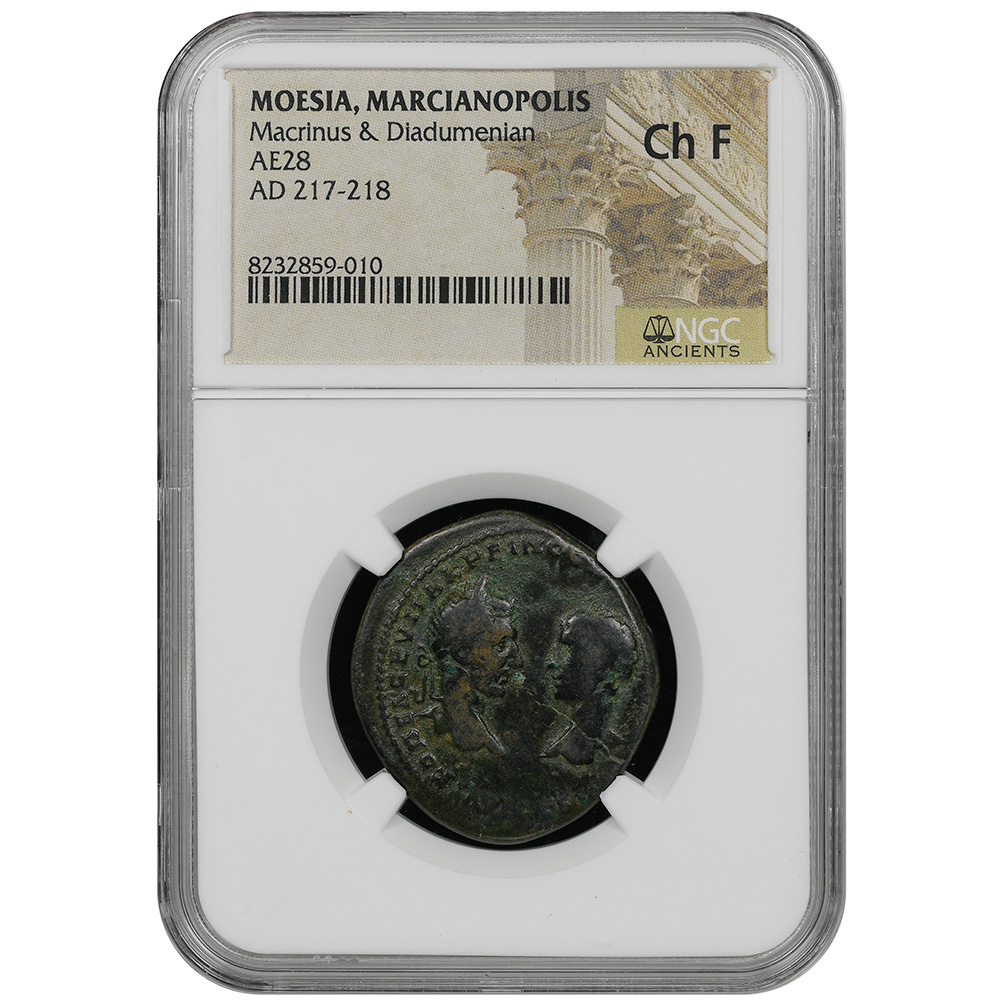

CVC & Collectables presents a provincial bronze from Moesia Inferior struck at Marcianopolis during the brief reign of Emperor Macrinus and his son Diadumenian. This AE28 issue reflects the political urgency of the period, emphasizing unity and stability through its reverse depiction of Homonoia, a common provincial theme during times of transition.
Coin Highlights:
- Issuer: Moesia Inferior, Marcianopolis
- Rulers: Macrinus & Diadumenian
- Date: AD 217–218
- Denomination: AE28 (Provincial Bronze)
- Metal: Bronze
- Grade: NGC Choice Fine (Ch F)
- Diameter: 28 mm
- Obverse: Confronted or jugate busts of Macrinus and Diadumenian with Greek legend naming the emperors.
- Reverse: Homonoia standing left, wearing a modius on her head, holding a patera and cornucopia; flaming altar at left.
- Reference: Provincial issue of Marcianopolis (various magistrates and legend forms known).
Emperor History
- Macrinus (AD 217–218): First emperor from the equestrian class. Came to power after Caracalla’s death but lacked senatorial and military support.
- Diadumenian: Elevated to Caesar, and briefly Augustus, in an effort to secure dynastic legitimacy.
- Key Events: Short reign marked by unrest, financial strain, and eventual overthrow by Elagabalus’ supporters.
- Coinage Legacy: Provincial issues like this AE28 emphasize unity and civic order amid political uncertainty.
Collectibility:
Marcianopolis bronzes featuring both Macrinus and Diadumenian are popular among collectors of Roman provincial coinage due to their short reign and historical context. The AE28 format offers ample space for detailed iconography, and the Homonoia reverse is a classic type sought for its symbolism. Certified by NGC as Choice Fine, this example retains clear devices and an attractive, stable patina appropriate for the grade.
Embark on a journey through time with ancient coins that span from 400 BC to AD 1055 at Chula Vista Coins. Explore a captivating collection of numismatic treasures that offer glimpses into civilizations long past. Uncover the allure of ancient history through this link: Ancient Coins (400 BC – AD 1055).