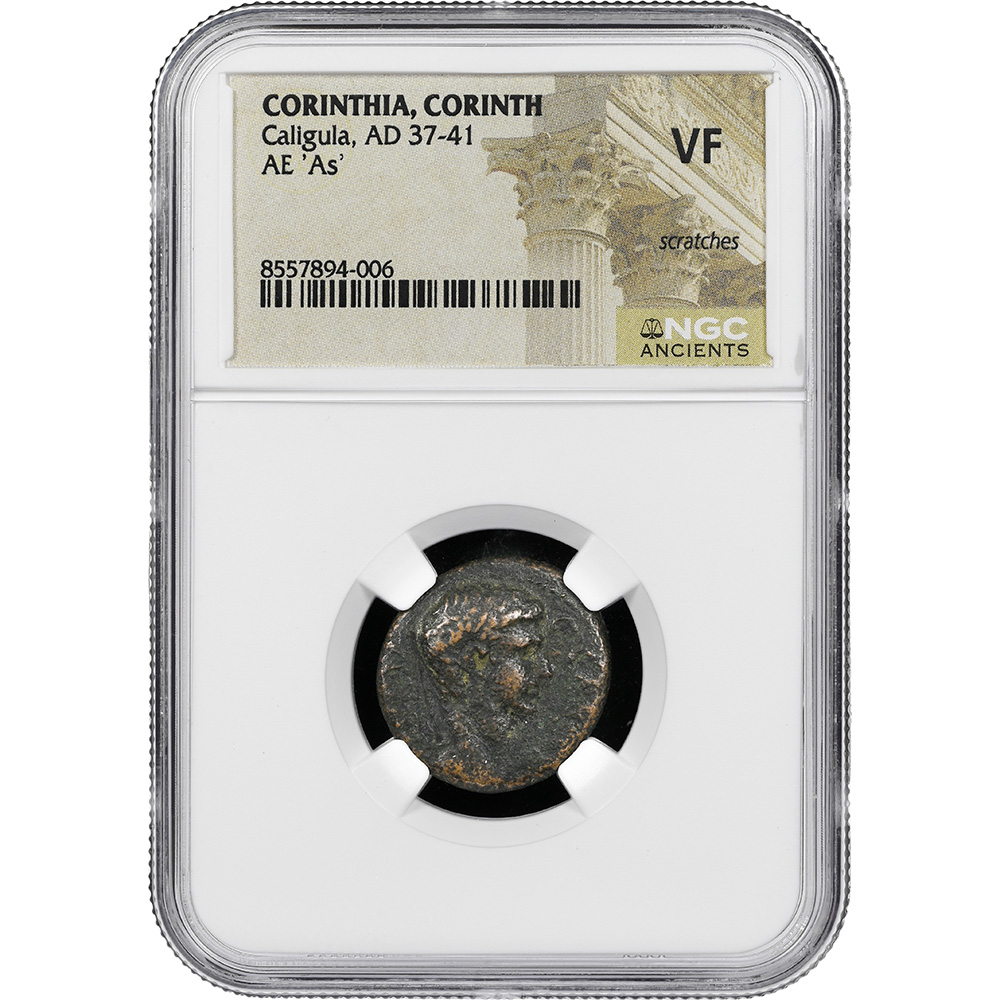

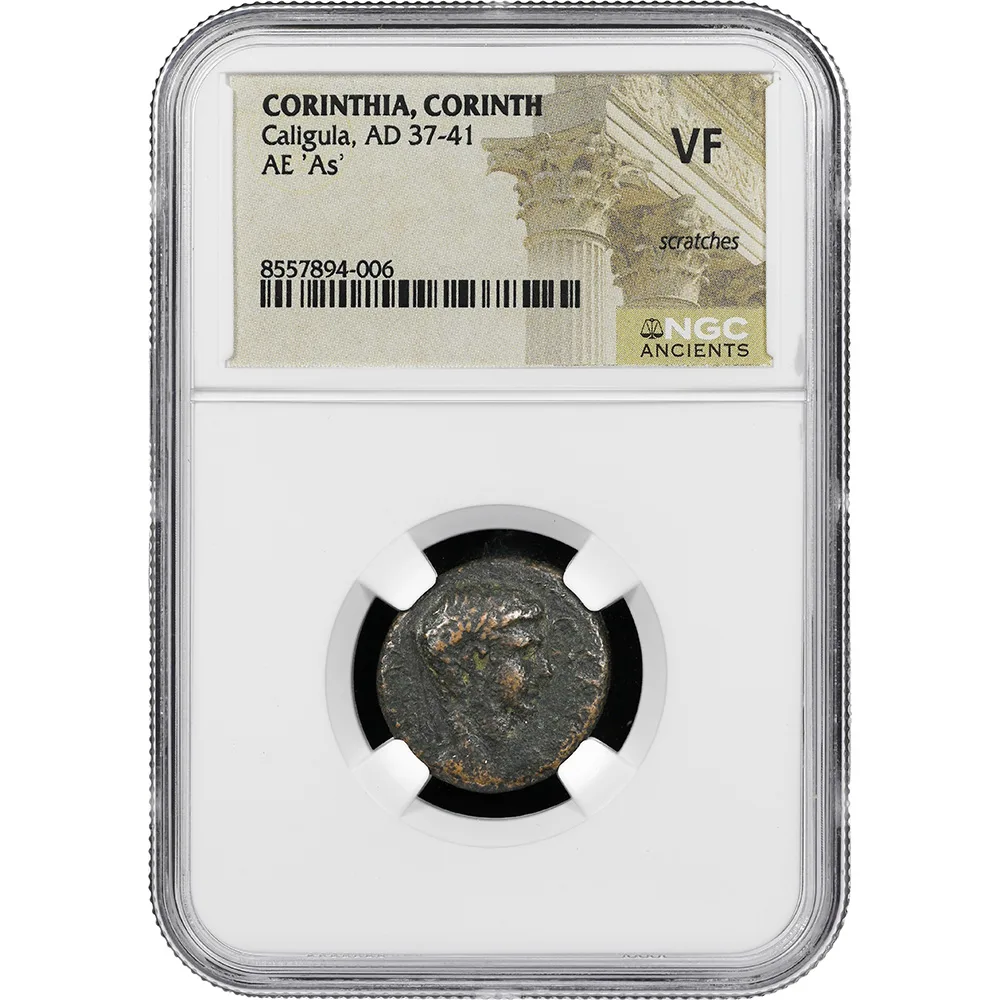
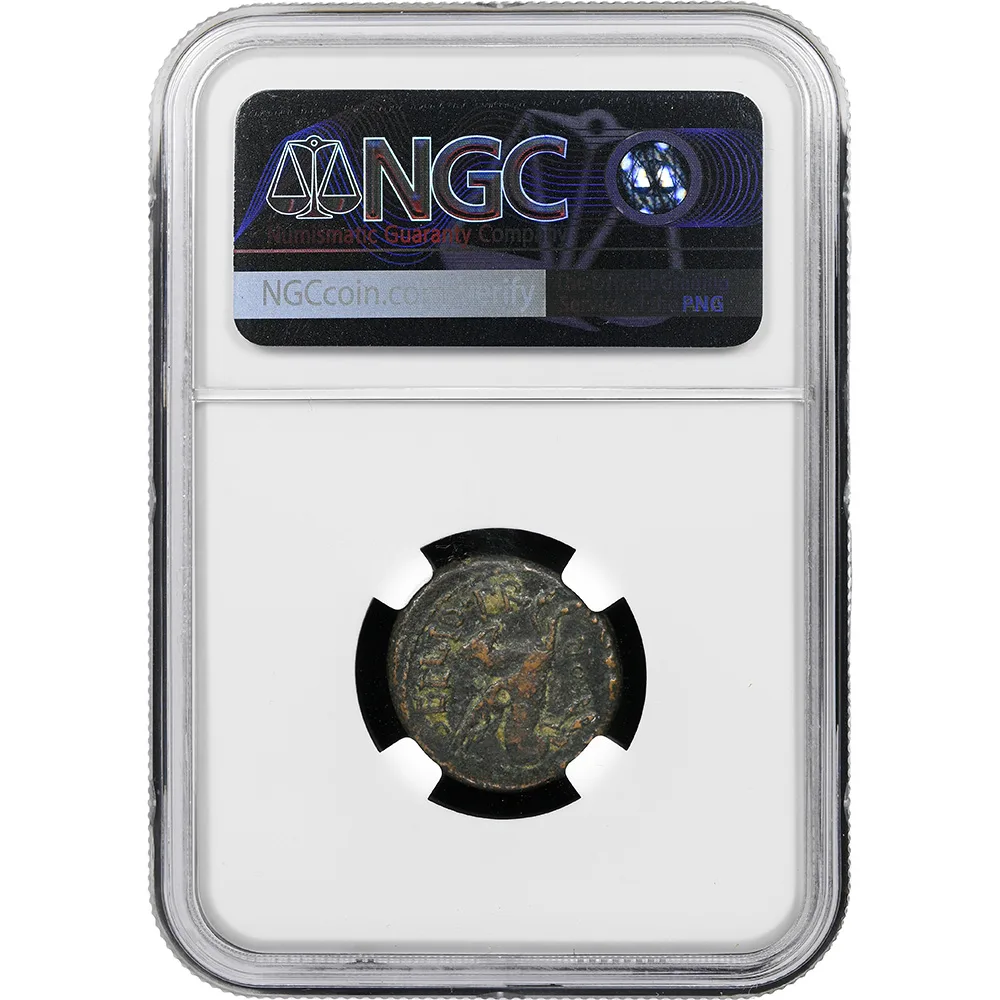
Minted at the ancient city of Corinth in Achaea (modern Greece) during AD 37-38, this attractive AE As is certified NGC VF and features the legendary winged horse Pegasus, one of the most enduring symbols of Corinth.
Coin Highlights:
- Emperor: Caligula (Gaius Augustus Germanicus)
- Reign: AD 37-41
- Date: AD 37-38
- Mint: Corinth, Achaea
- Denomination: AE As
- Composition: Bronze
- Weight: 6.98 grams
- Diameter: 20 mm
- Grade: NGC VF
- Reference: RPC I 1172a
Obverse:
- Bare-headed portrait of Caligula facing right.
- Legend: C CAESAR AVG
- Depicts the young emperor during the early years of his reign.
Reverse:
- Pegasus flying across the field.
- Legend references Publius Vipsanius Agrippa, serving as duovir of Corinth.
- The winged horse Pegasus was the traditional civic emblem of Corinth and appeared on the city’s coinage for centuries.
Historical Significance:
Corinth was among the most important cities of Roman Greece and retained many of its Greek traditions under Roman rule. The city’s association with Pegasus stretches back to the classical period and reflects Corinth’s rich mythological heritage. Provincial issues such as this demonstrate how local communities blended Roman imperial portraits with long-established regional symbols.
The reverse inscription honors local magistrate Publius Vipsanius Agrippa, highlighting the role of civic officials in administering Roman provincial cities while maintaining local identity within the empire.
Emperor History: Caligula (AD 37-41)
Caligula, born Gaius Julius Caesar Germanicus, became emperor in AD 37 following the death of Tiberius. Initially welcomed by the Roman people, his reign soon became associated with extravagance, political turmoil, and increasingly erratic behavior. Ancient historians recount stories of lavish spending, harsh treatment of political opponents, and controversial actions that damaged relations with the Senate.
Despite ruling for less than four years, Caligula remains one of the most recognizable figures of Roman history. He was assassinated by members of the Praetorian Guard in AD 41 and succeeded by his uncle Claudius. Coins issued during his brief reign are highly sought after due to their historical significance and relatively limited period of production.
Collectibility:
Provincial coins of Caligula are considerably scarcer than many issues of later emperors. Corinthian bronzes featuring Pegasus are especially appealing because they combine the portrait of one of Rome’s most famous rulers with one of the most iconic symbols of ancient Greek coinage. Certified NGC VF examples offer collectors an attractive and historically significant connection to both Roman and Greek history. Find more alike here!