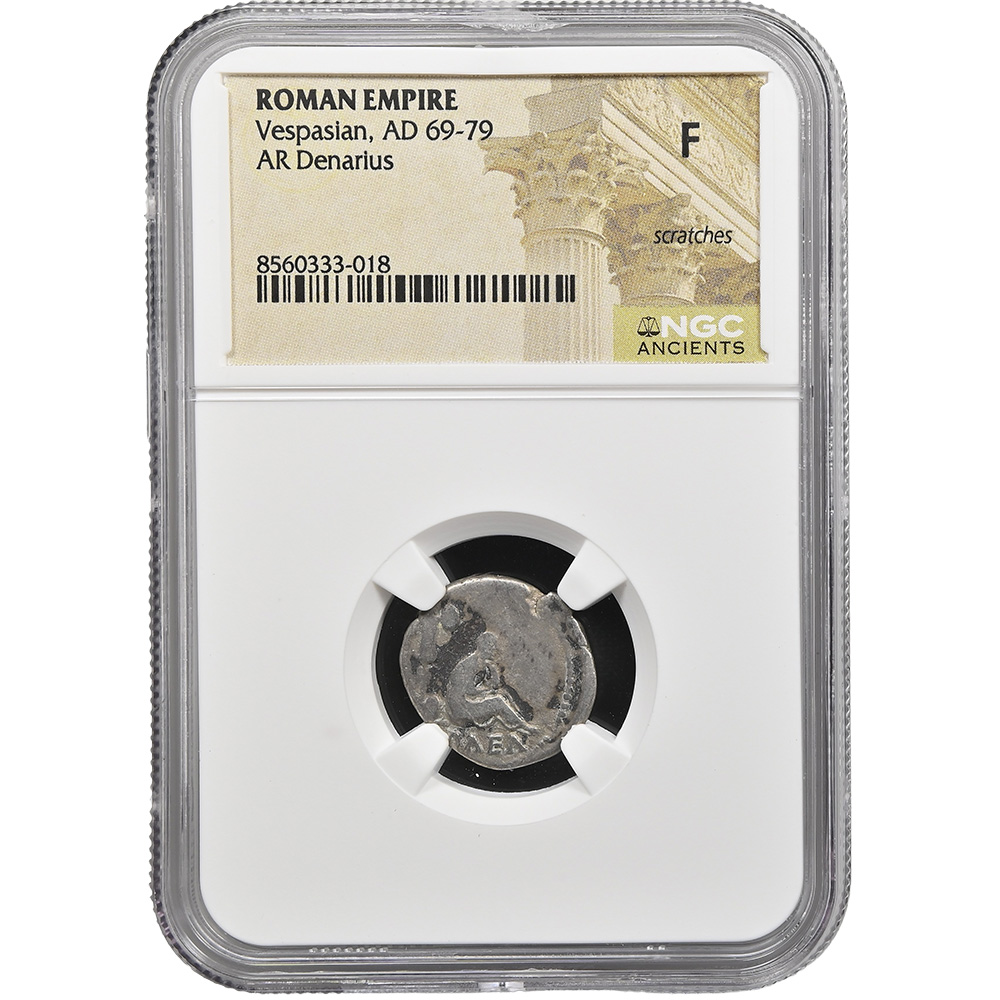
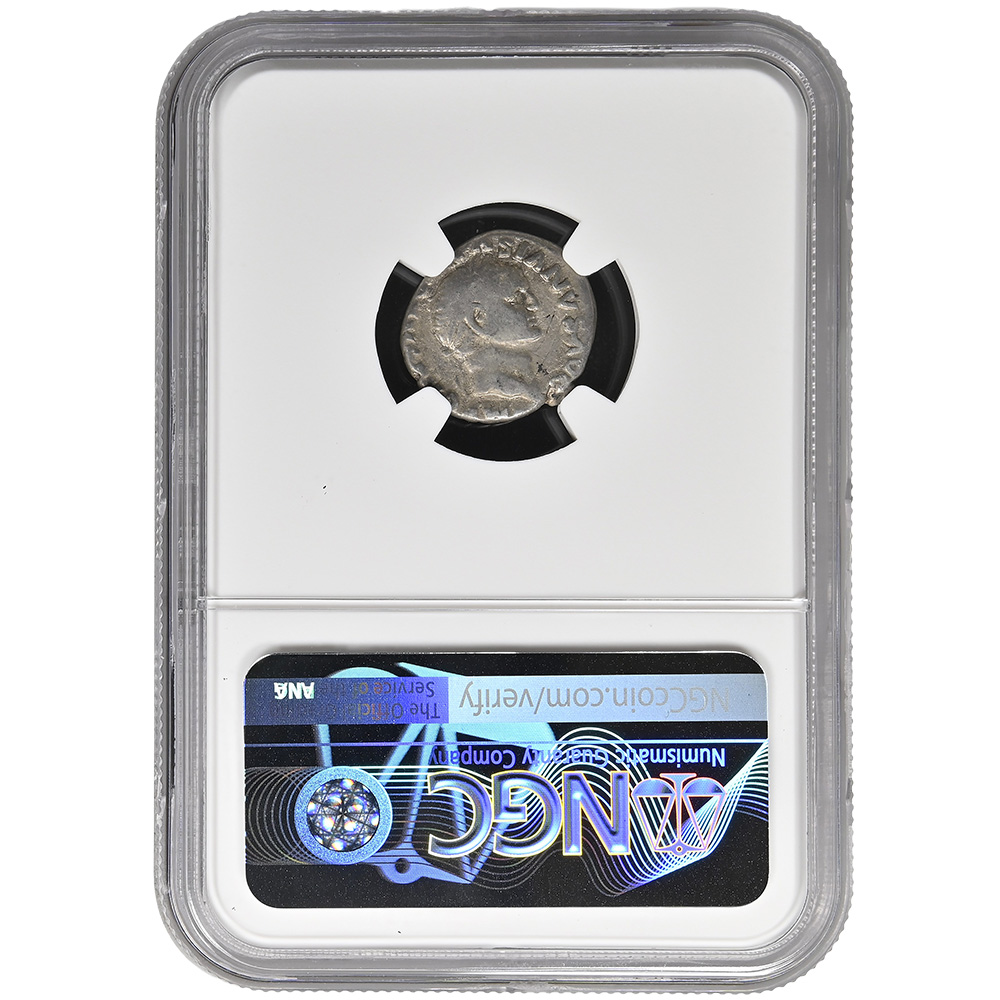
CVC & Collectables introduces this ancient Roman Silver Denarius of Emperor Vespasian, struck circa AD 69–70, features the historically significant Judaea Capta reverse commemorating the Roman campaign in Judaea. The reverse depicts a seated Jewish captive beside a military trophy, with the inscription IVDAEA below. Cataloged as RSC 226 and certified NGC Fine (F), this coin represents an important historical issue from the early Flavian dynasty.
Coin Highlights
-
Empire: Roman Empire
-
Emperor: Vespasian
-
Date: AD 69–70
-
Denomination: Denarius
-
Composition: Silver (AR)
-
Dynasty: Flavian
-
Reverse Type: Judaea Capta
-
Reference: RSC 226
-
Obverse Legend: IMP CAESAR VESPASIANVS AVG
-
Obverse: Laureate head of Vespasian facing right
-
Reverse Legend: IVDAEA
-
Reverse: Seated female captive representing Judaea, with a military trophy behind
-
Grade: NGC Fine (F)
-
NGC Comments: Scratches
-
Certification Number: 8560333-018
Design & Devices
Obverse: Features the laureate head of Emperor Vespasian facing right, surrounded by the imperial inscription IMP CAESAR VESPASIANVS AVG. The portrait reflects the realistic style associated with early Flavian coinage.
Reverse: Depicts a seated female figure representing the conquered province of Judaea, positioned beside a military trophy composed of captured arms and armor. The inscription IVDAEA appears beneath the scene, identifying the province.
The reverse belongs to the celebrated Judaea Capta series, which used symbolic imagery to communicate Roman military victories.
Historical Significance
The Judaea Capta coinage commemorates Rome’s suppression of the First Jewish–Roman War, which began in AD 66. Vespasian initially commanded Roman forces in Judaea before becoming emperor in AD 69.
His son Titus continued the campaign, culminating in the capture of Jerusalem and the destruction of the Second Temple in AD 70.
Coins bearing the Judaea Capta imagery were issued as imperial propaganda, celebrating Rome’s victory and reinforcing the legitimacy of the newly established Flavian dynasty.
Today, these coins are important historical artifacts documenting one of the most consequential conflicts in Roman and Jewish history.
Emperor History – Vespasian
Vespasian (AD 69–79) founded the Flavian dynasty following the political turmoil of the Year of the Four Emperors in AD 69.
His reign restored stability to the Roman Empire after the civil wars that followed Nero’s death. Vespasian strengthened imperial finances, reorganized military administration, and initiated major public building projects, including construction of the Flavian Amphitheatre, later known as the Colosseum.
His military successes and administrative reforms helped establish a more stable imperial government, while his Judaean campaigns became a central theme of Flavian coinage.
Collectibility
The Judaea Capta Denarius is highly collectible for its direct connection to the First Jewish–Roman War and the establishment of the Flavian dynasty. Its distinctive captive-and-trophy reverse makes it particularly appealing to collectors of Roman military history, Judaean history, and ancient silver coinage.
This example is certified NGC Fine, with scratches noted on the holder. Despite its circulation wear, the coin retains recognizable imperial portraiture and the historically important reverse imagery.