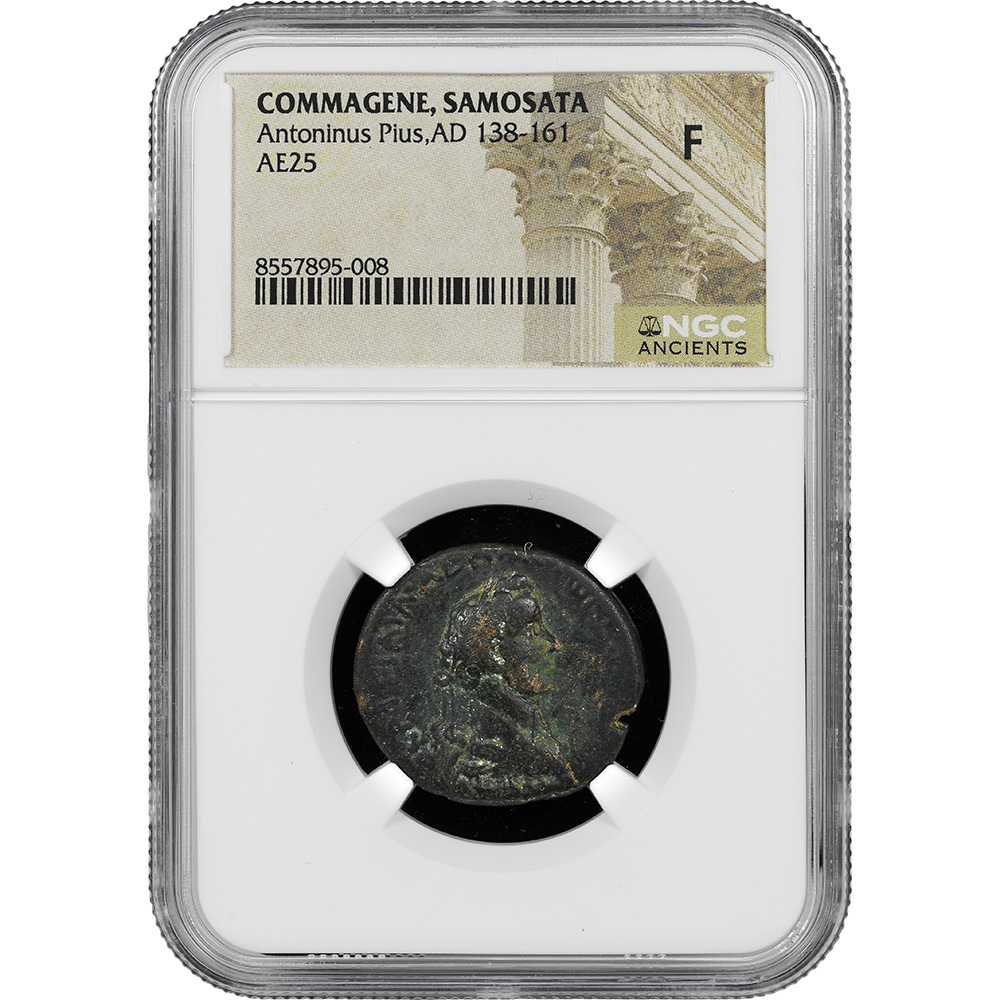
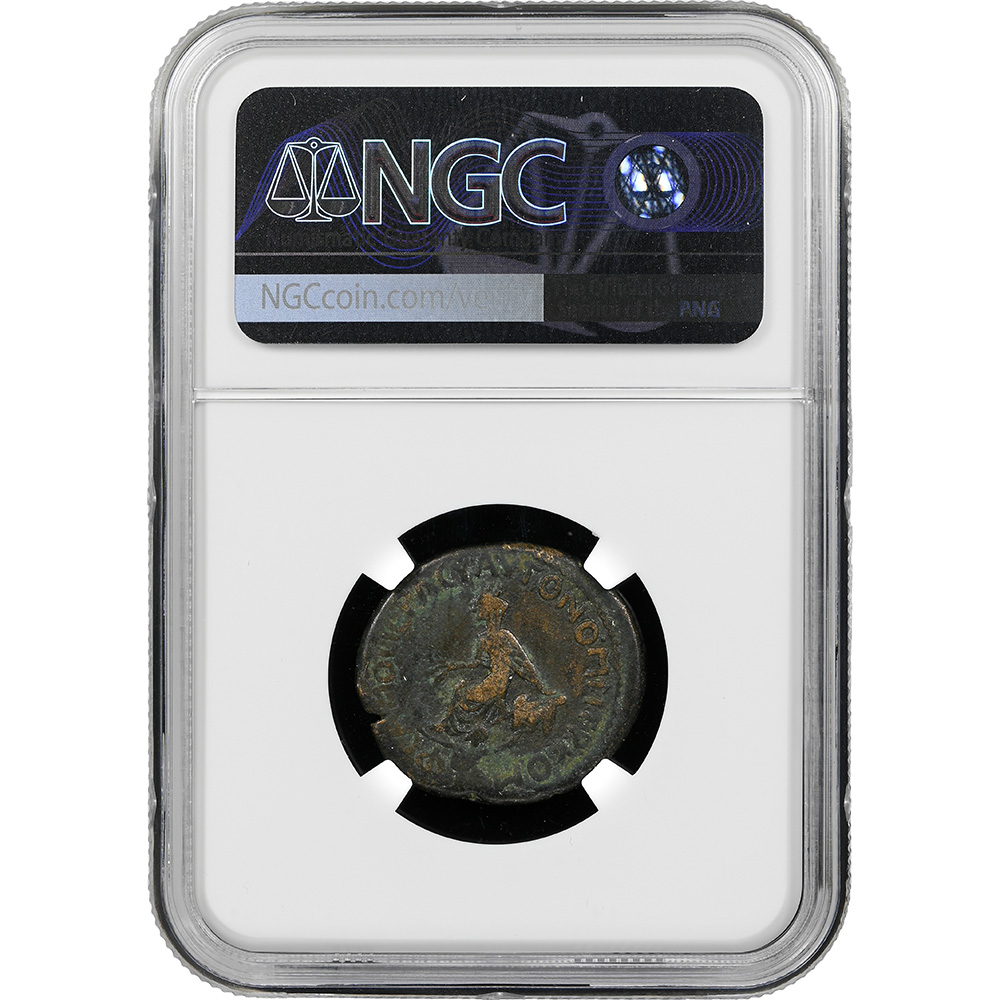
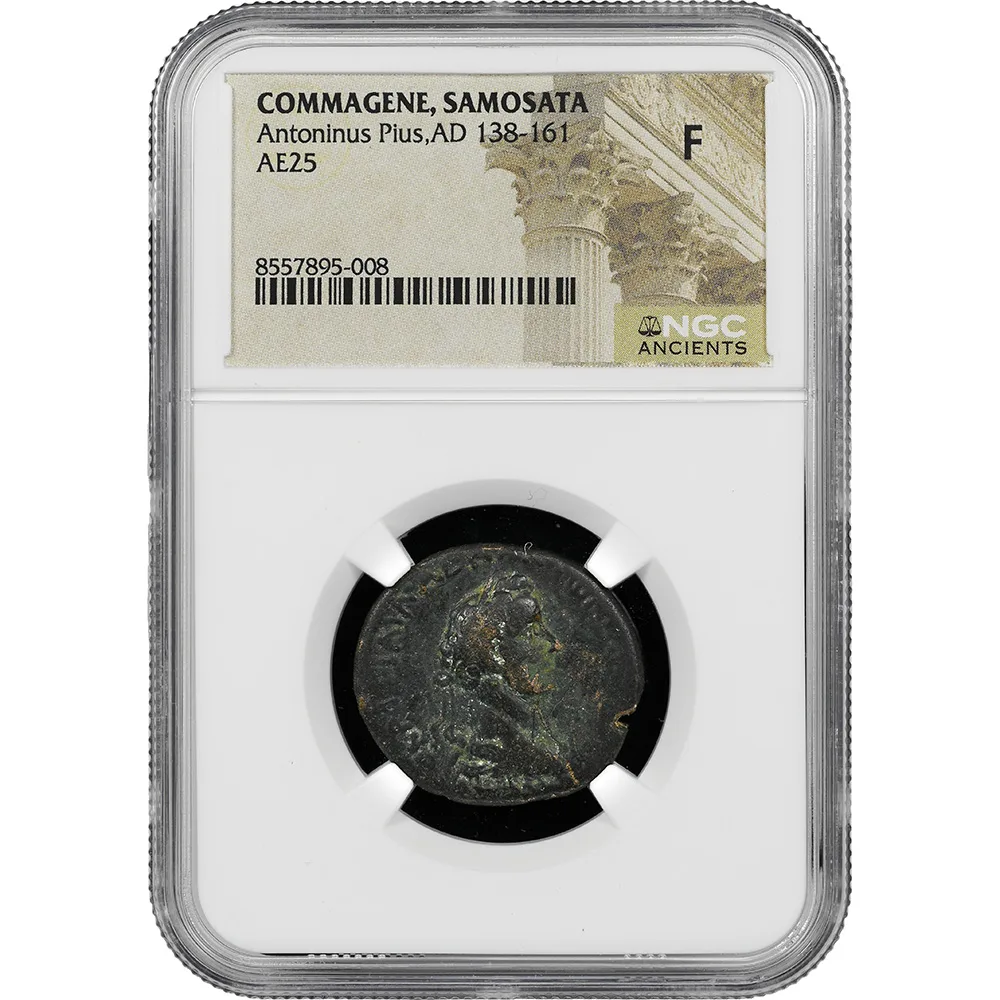
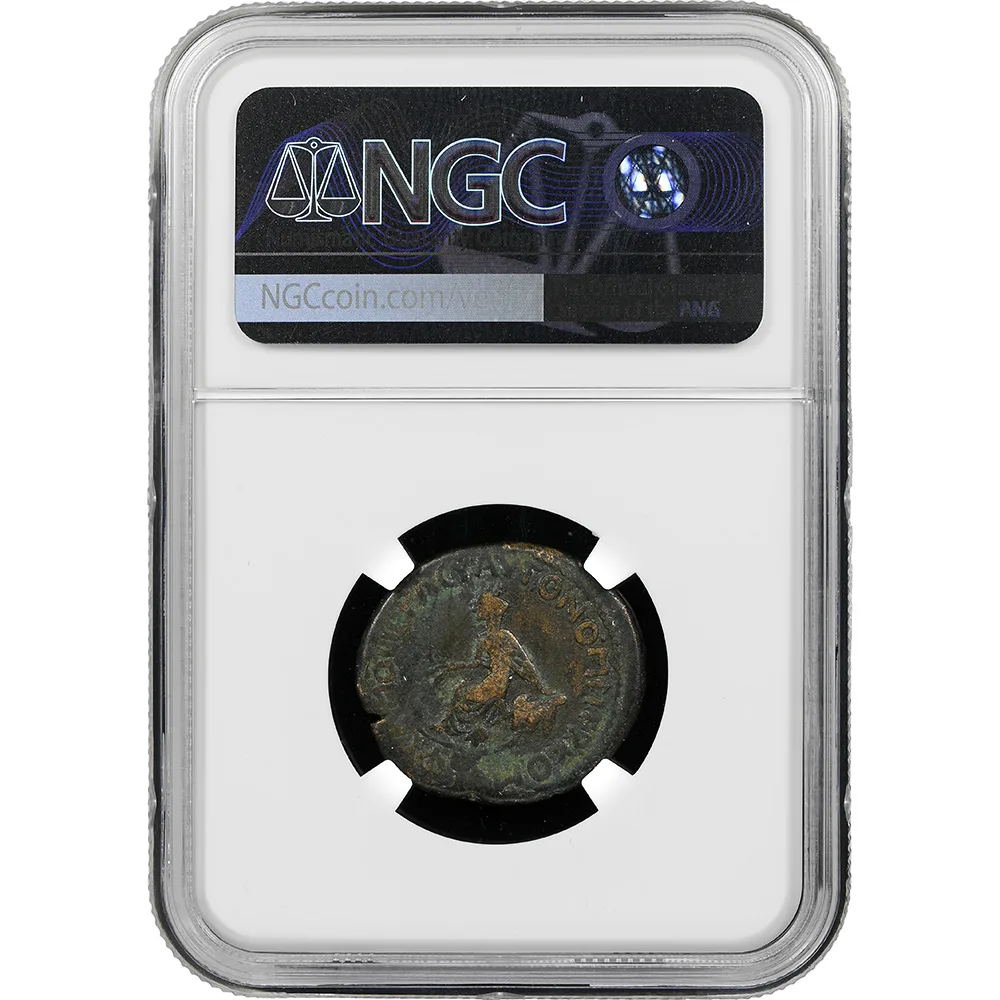
Certified NGC Fine, this provincial issue showcases the emperor’s portrait alongside an intricate reverse depicting Tyche, guardian deity of the city, seated above the river-god Euphrates.
Coin Highlights:
- Issuer: Commagene, Samosata
- Emperor: Antoninus Pius (AD 138-161)
- Date: AD 138-161
- Denomination: AE25
- Composition: Bronze
- Diameter: 25 mm
- Grade: NGC Fine (F)
- References: RPC IV.1 Online 5749; Butcher 16
- Mint: Samosata, Commagene
Obverse:
- Laureate, draped, and cuirassed bust of Antoninus Pius facing right.
- Greek legend naming the emperor and his titles.
Reverse:
- Turreted Tyche seated left upon a rock.
- Holds poppy and grain ears in her right hand.
- River-god Euphrates appears below.
- Greek legend emphasizing the sacred and autonomous status of Samosata.
Historical Significance:
Samosata was the capital of the ancient Kingdom of Commagene and later became an important Roman provincial city situated along the Euphrates River. Its strategic location made it a critical link between the Roman Empire and the eastern territories of Mesopotamia. Provincial coinage from Samosata often blended imperial portraits with distinctly local imagery, reflecting both Roman authority and regional identity.
Emperor History: Antoninus Pius (AD 138-161)
Antoninus Pius succeeded Hadrian in AD 138 and ruled for nearly twenty-three years. His reign is widely regarded as one of the most peaceful and prosperous in Roman history. He strengthened imperial finances, promoted legal reforms, and maintained stability across the empire without extensive military campaigns. His administration helped preserve the Pax Romana and prepared the empire for the reign of Marcus Aurelius.
Collectibility:
Roman provincial bronzes depicting Tyche and local river deities are highly sought after for their historical and artistic significance. This example from Samosata combines an appealing portrait of Antoninus Pius with symbolism tied directly to the Euphrates frontier, making it a desirable addition for collectors of Roman provincial and ancient Near Eastern coinage. Find more alike here!