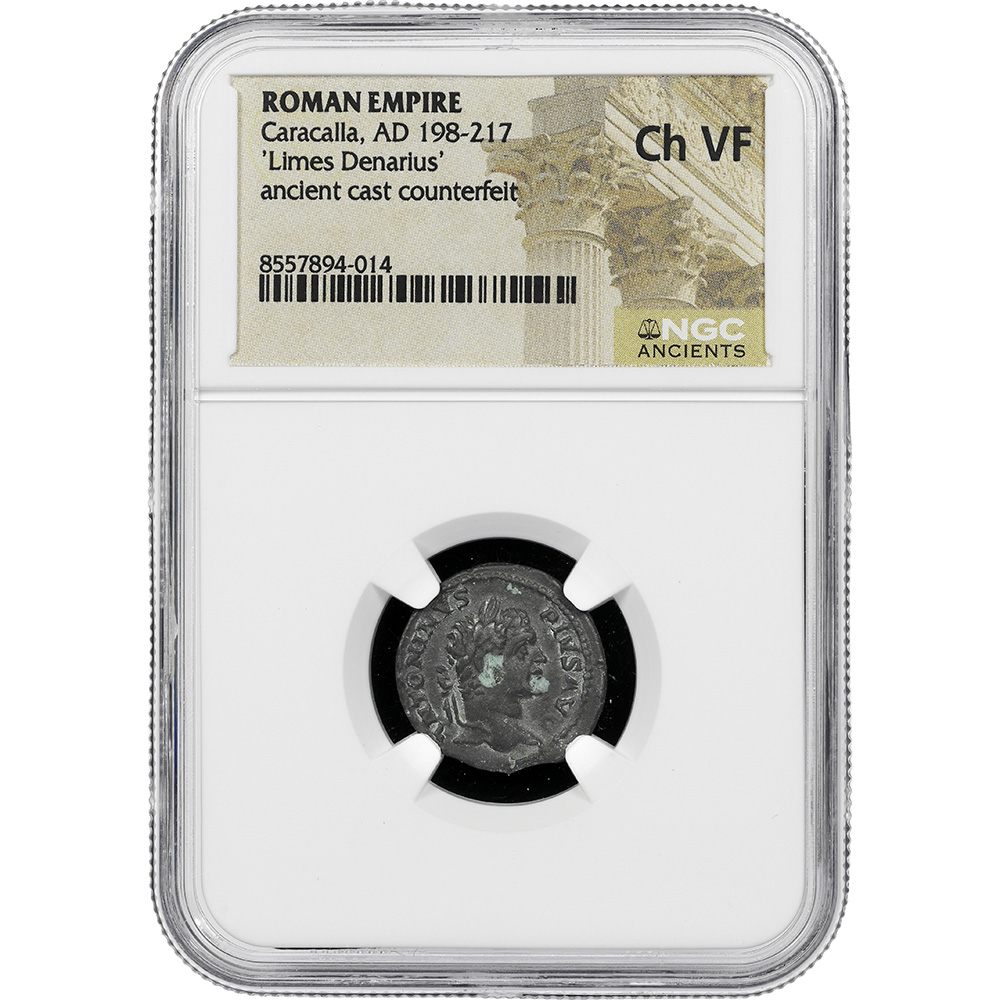
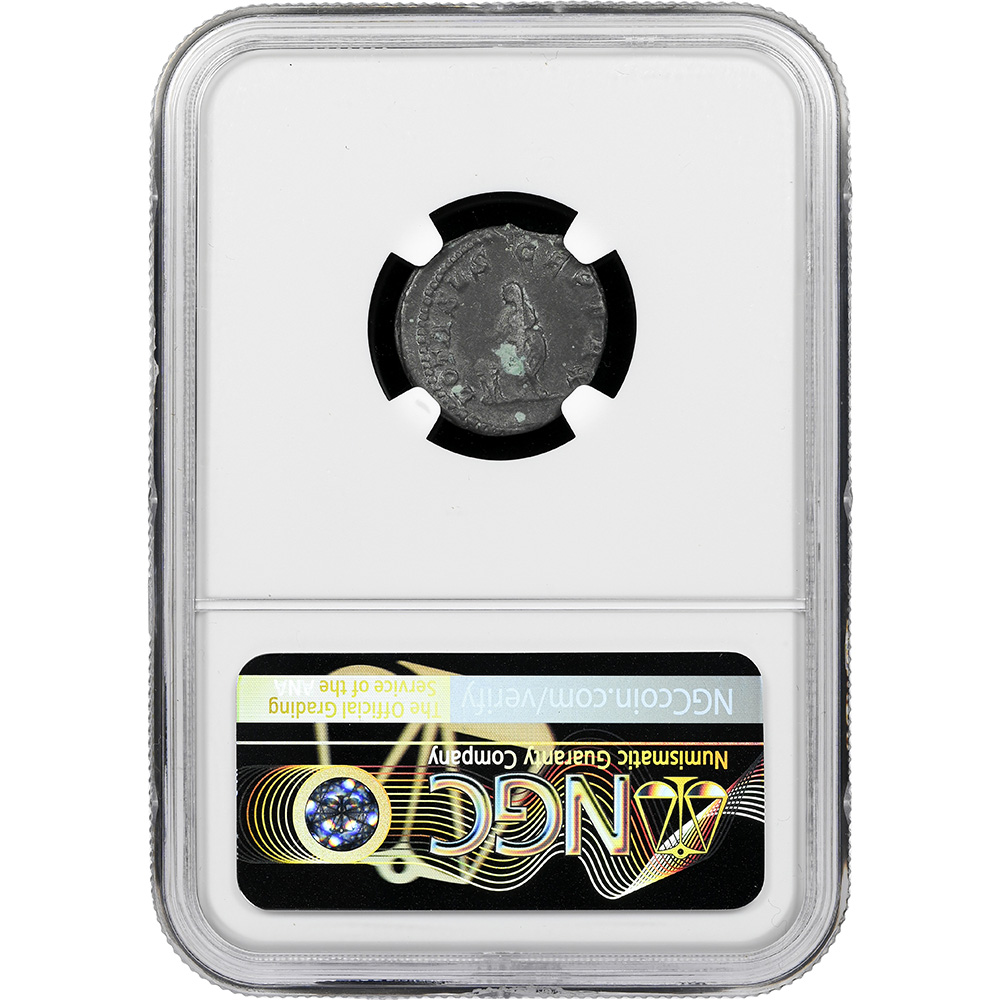
Certified NGC Choice VF, this ancient frontier issue belongs to one of the most mysterious categories of Roman coinage and provides a fascinating glimpse into the economic challenges faced along the borders of the Roman Empire.
Coin Highlights:
- Emperor: Caracalla (AD 198-217)
- Denomination: Limes Denarius
- Composition: Bronze (AE)
- Grade: NGC Choice VF
- Type: Frontier Coinage / Ancient Cast Counterfeit
- Era: Severan Dynasty
- Attribution: Roman Empire
Obverse:
- Laureate bust of Caracalla facing right.
- Styled after official Roman silver denarii circulating during his reign.
Reverse:
- Reverse design copied from a contemporary imperial denarius prototype.
- Faithfully reproduces official Roman coinage while utilizing a bronze flan rather than silver.
Historical Significance:
The so-called Limes Denarii remain one of the most debated forms of Roman currency. The term “Limes” refers to the frontier regions of the empire, though modern scholars recognize that the name itself may not accurately describe their true purpose. These bronze coins imitate official silver denarii and are known from large numbers across various frontier regions.
Many examples were struck or cast from bronze and occasionally coated with a thin silver wash. Their production may have been motivated by shortages of official silver coinage, military necessities, local economic demands, or political instability in distant provinces. Some scholars believe they served as emergency currency for soldiers stationed along the empire’s borders, while others suggest they were locally produced substitutes, military scrip, or tolerated unofficial issues.
Despite decades of study, their exact role within the Roman monetary system remains uncertain, making them among the most fascinating and mysterious coins of the ancient world.
Emperor History: Caracalla (AD 198-217)
Caracalla, born Lucius Septimius Bassianus, became emperor alongside his father Septimius Severus before assuming sole rule following the death of his brother Geta. He is best remembered for the Constitutio Antoniniana of AD 212, which extended Roman citizenship to nearly all free inhabitants of the empire.
His reign was heavily focused on military campaigns and maintaining army loyalty through increased pay and benefits. These policies placed significant strain on imperial finances and contributed to the monetary pressures affecting the Roman economy during the Severan era. Such conditions provide important context for understanding unusual coinage forms such as the Limes denarii.
Collectibility:
Limes denarii are highly sought after by collectors interested in the lesser-understood aspects of Roman numismatics. Their uncertain status—whether official emergency issues, military currency, local imitations, or ancient counterfeits—continues to inspire scholarly discussion. Examples associated with famous emperors such as Caracalla are especially desirable due to their connection with the Roman frontier, military history, and the evolving monetary system of the empire.
Embark on a journey through time with ancient coins that span from 400 BC to AD 1055 at Chula Vista Coins. Explore a captivating collection of numismatic treasures that offer glimpses into civilizations long past. Uncover the allure of ancient history through this link: Ancient Coins