
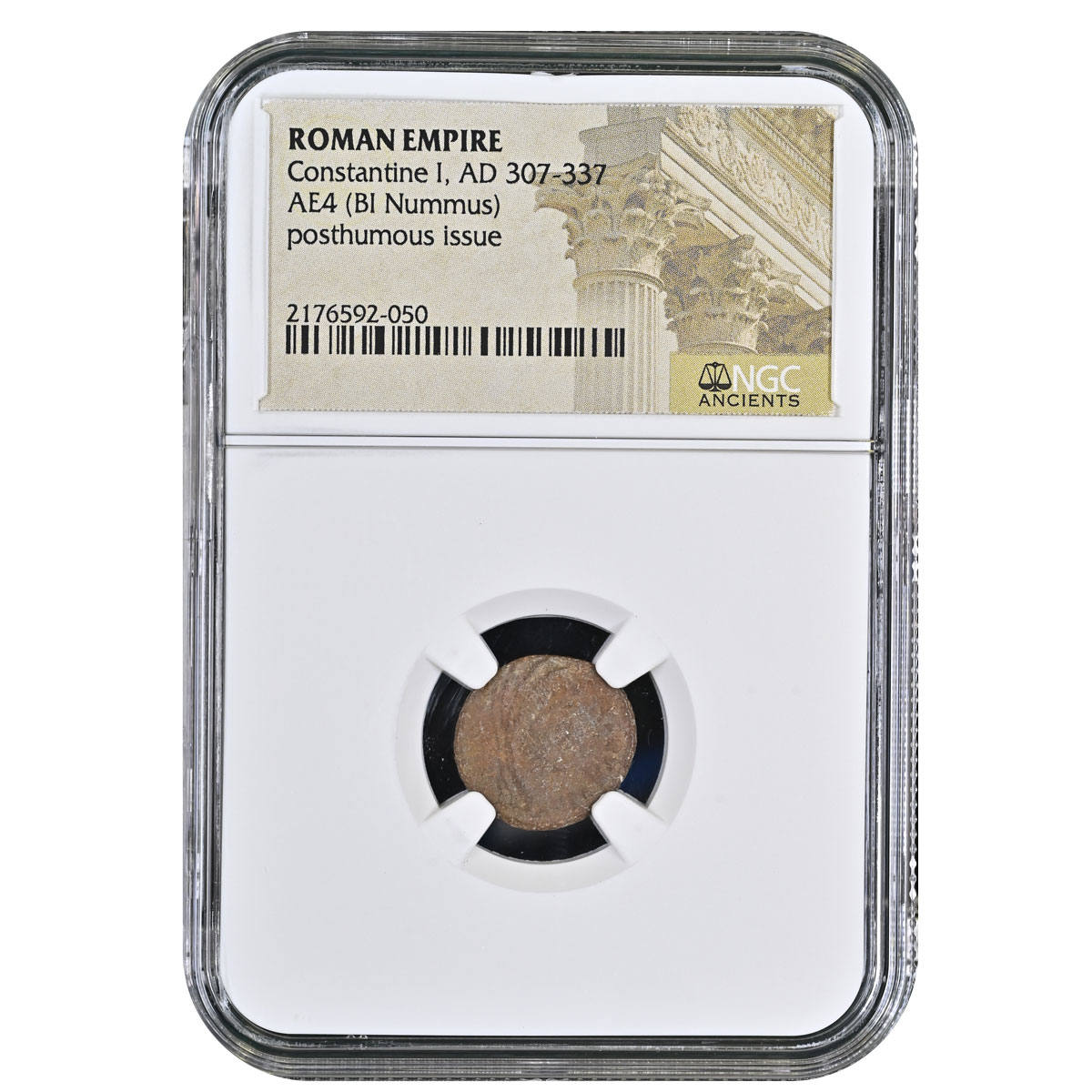
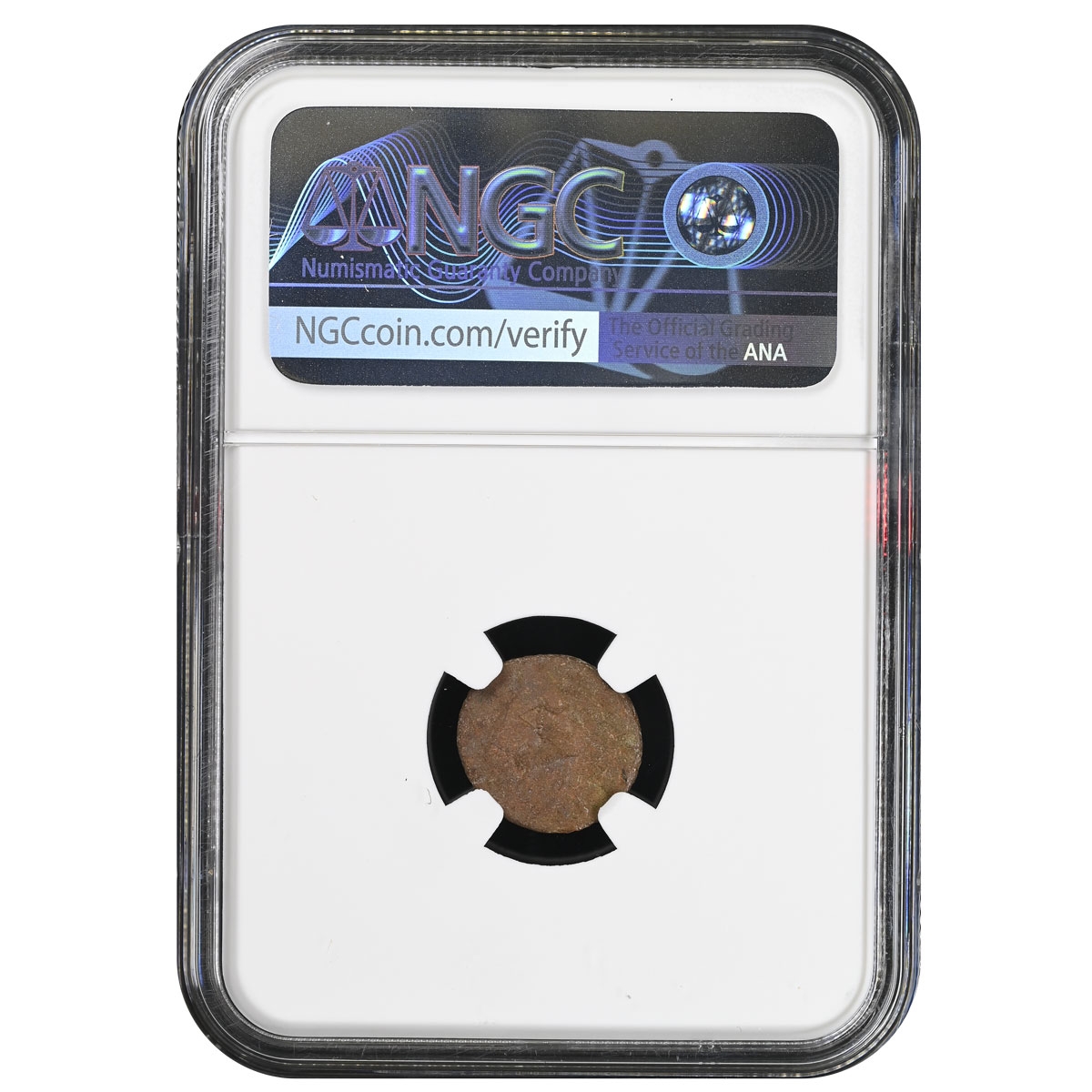
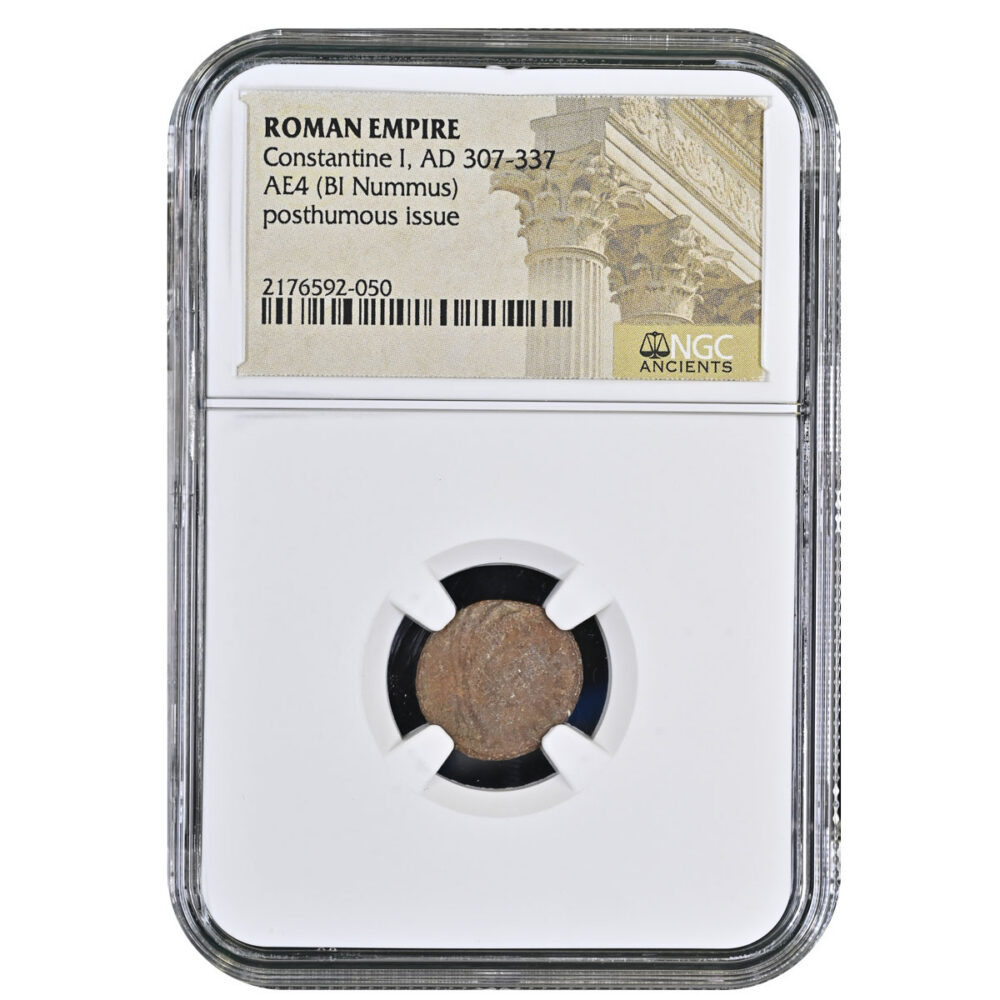
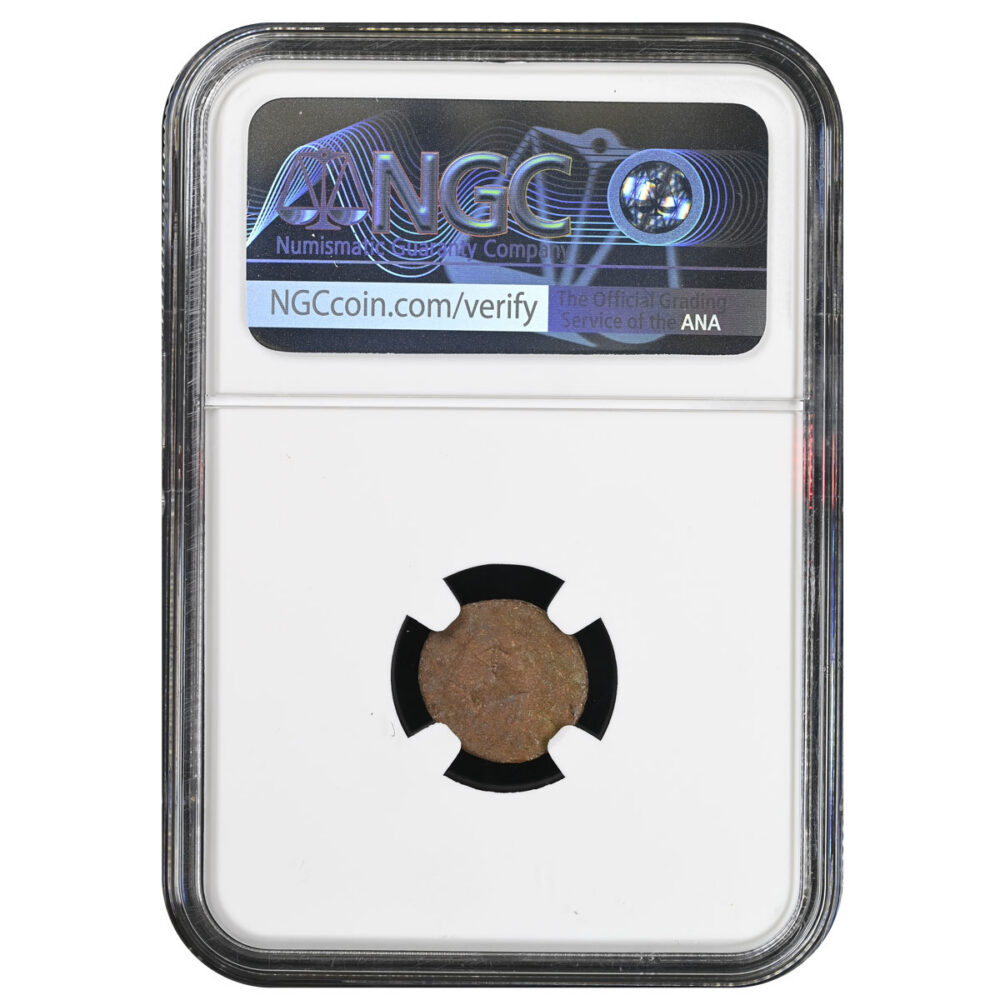
These small late Roman coins are especially notable for combining traditional Roman imagery with early Christian symbolism. This example has been authenticated and encapsulated by NGC Ancients.
Coin Highlights:
- Empire: Roman Empire
- Emperor: Constantine I “the Great”
- Reign: AD 307–337
- Issue: Posthumous
- Approximate Issue Date: AD 337–340
- Denomination: AE4 / BI Nummus
- Composition: Billon/Bronze
- Small late Roman denomination, typically around 15–16 mm for the quadriga type.
- Issued following the death of Constantine I.
- Authenticated and encapsulated by NGC Ancients.
Obverse:
Features a veiled portrait of Constantine I facing right, identifying the deceased and deified emperor. Examples carry the legend DV CONSTANTINVS PT AVGG, referring to the divine Constantine as father of the emperors.
Reverse:
The famous posthumous type depicts Constantine in a quadriga, or four-horse chariot, ascending toward the Hand of God reaching down from above. NGC describes the imagery as Constantine ascending heavenward and approaching the Hand of God, making it one of the most distinctive Christian-themed designs of the Late Roman period.
Emperor History
Constantine I, better known as Constantine the Great, was one of the most consequential emperors in Roman history. He became sole ruler of the Roman Empire in AD 324 and established Constantinople as a new imperial capital. His reign is particularly associated with the transformation of Christianity’s position within the Roman world.
Following his death in AD 337, commemorative coins were issued depicting the deceased emperor veiled. The quadriga and Hand of God reverse provided a striking representation of Constantine’s journey toward heaven.
Reviews
There are no reviews yet.