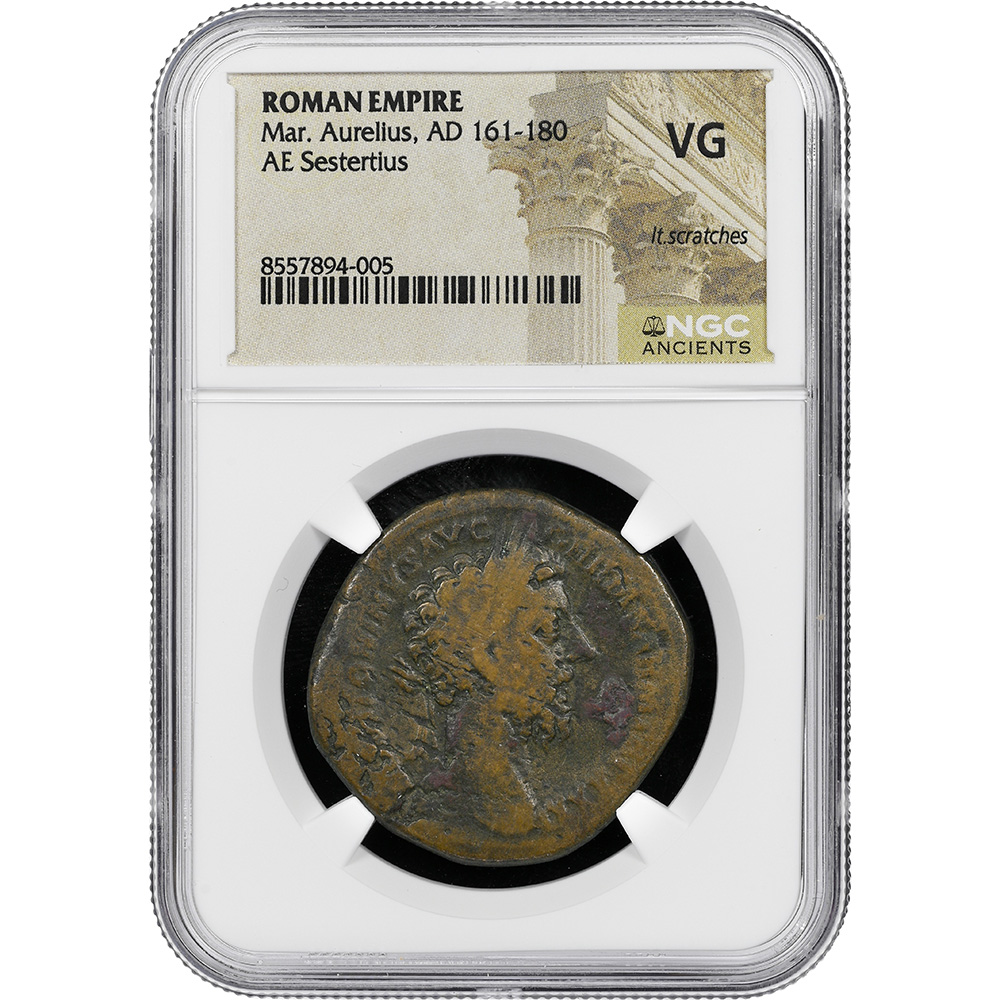
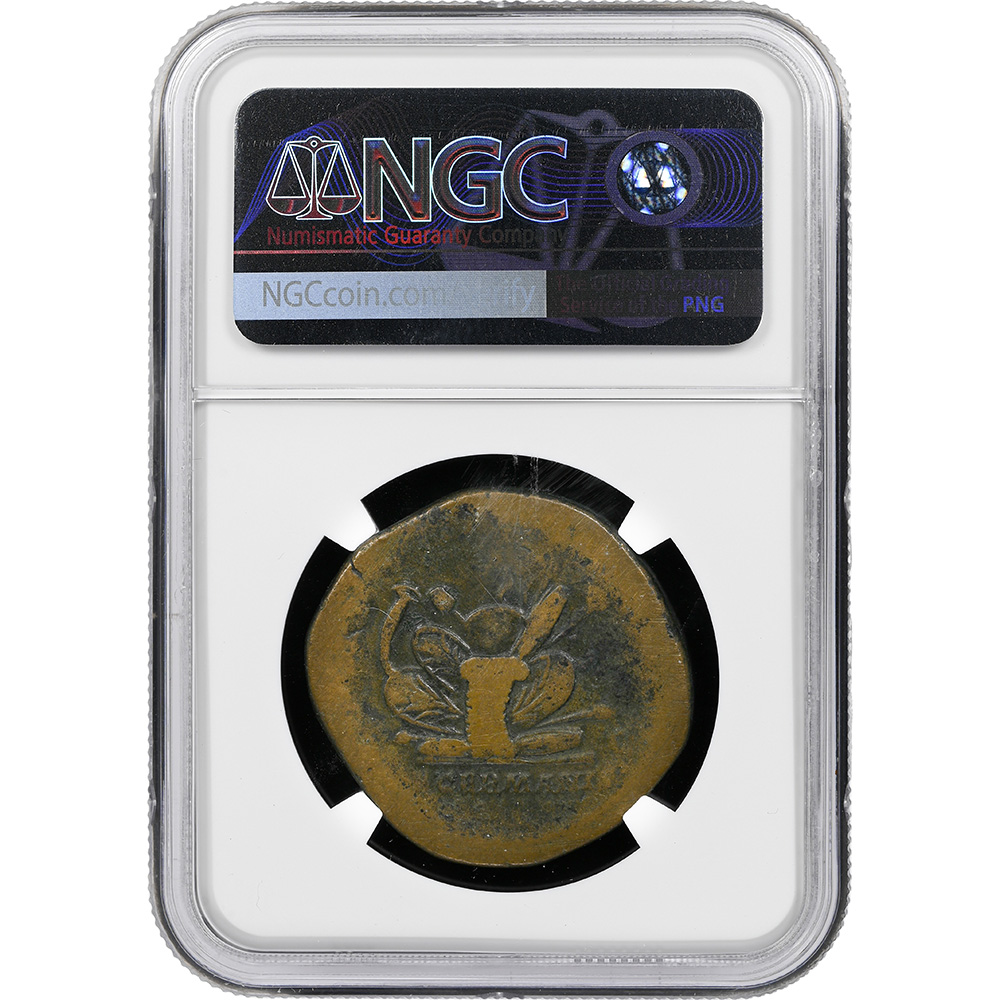
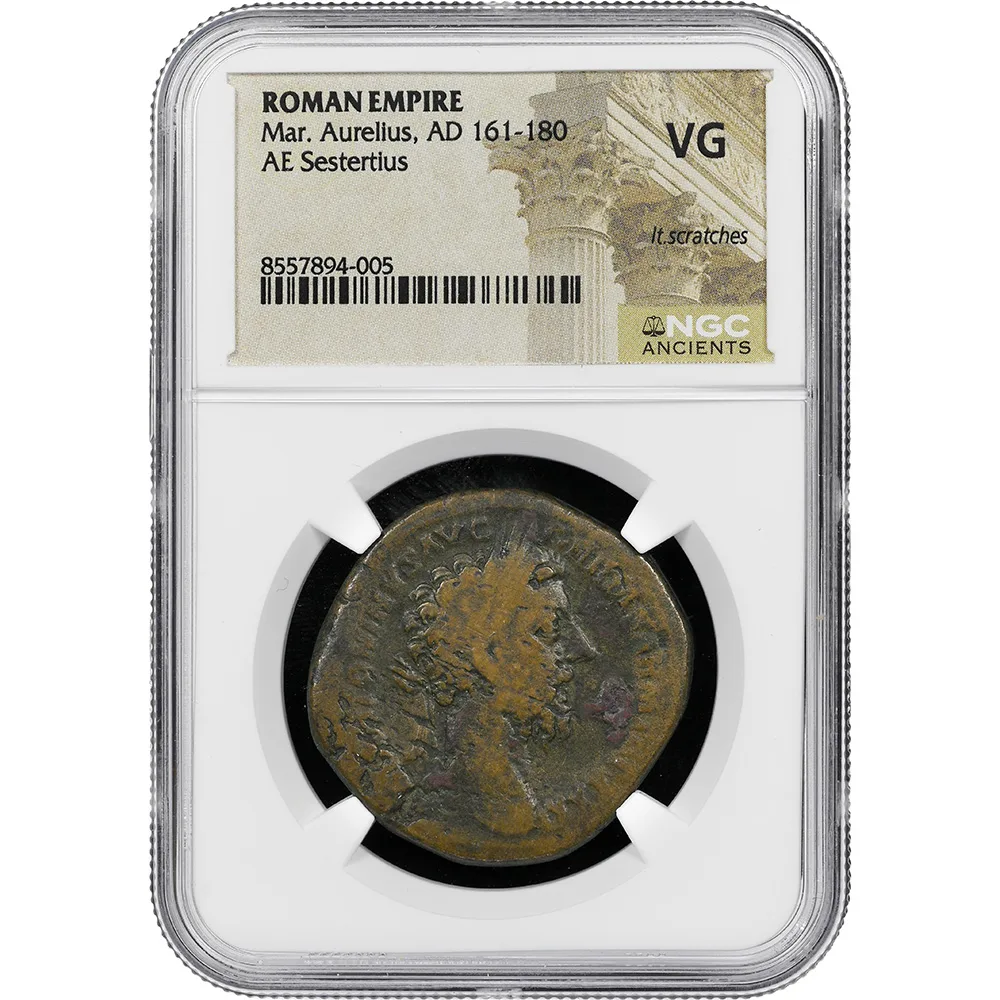
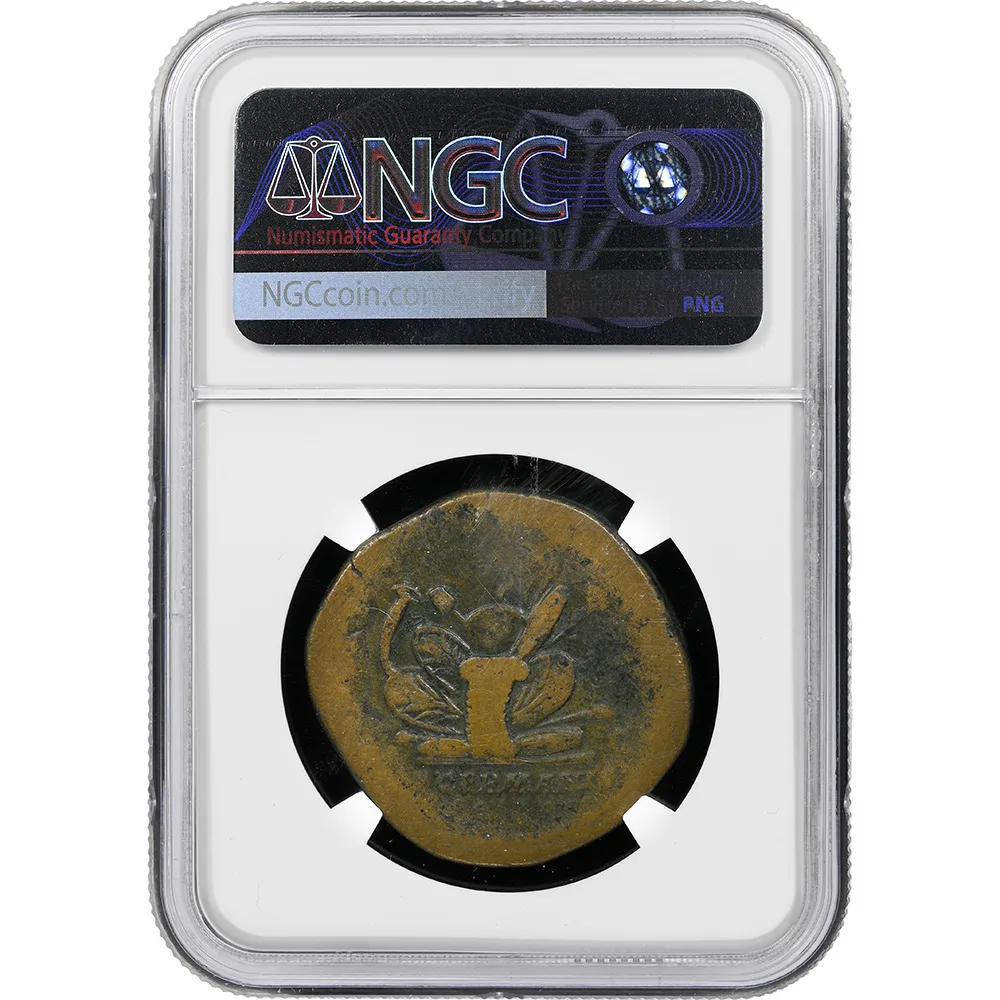
Graded NGC VG, this historic Roman issue commemorates the emperor’s military victories over the Germanic tribes and features a reverse depicting captured arms and trophies from Rome’s northern campaigns.
Coin Highlights:
- Emperor: Marcus Aurelius (AD 161-180)
- Date: AD 176-177
- Mint: Rome
- Denomination: Sestertius
- Composition: Bronze
- Grade: NGC VG
- Certification Notes: Scratches
- Reference: RIC III 1184
Obverse:
- Laureate and cuirassed bust of Marcus Aurelius facing right.
- Legend: M ANTONINVS AVG GERM SARM TR P XXXI
- Honors the emperor with titles celebrating victories over Germanic and Sarmatian peoples.
Reverse:
- Large military trophy composed of captured armor, shields, spears, vexillum, and dragon standards.
- Legend: IMP VIII COS III P P / S C
- Reverse inscription DE GERMANIS commemorates victories over Germanic tribes along Rome’s northern frontier.
Historical Significance:
This impressive sestertius was struck during the closing years of Marcus Aurelius’ reign while Rome was engaged in the lengthy Marcomannic Wars along the Danube frontier. These conflicts consumed much of the emperor’s later life and represented one of the greatest military challenges faced by the Roman Empire during the second century.
The reverse trophy celebrates Rome’s successes against Germanic tribes that threatened the empire’s northern borders. The captured weapons and military equipment shown on the reverse served as powerful propaganda, reminding Roman citizens of imperial victories and the emperor’s role as defender of the state.
Emperor History: Marcus Aurelius (AD 161-180)
Marcus Aurelius is remembered as one of Rome’s greatest rulers and the last of the “Five Good Emperors.” A philosopher-emperor, he authored the famous work Meditations, a collection of personal reflections on Stoic philosophy that remains influential today.
Despite his philosophical reputation, much of his reign was spent confronting military threats, particularly along the Danube frontier. The Marcomannic Wars occupied nearly a decade of his rule and tested the strength of the Roman Empire. Marcus Aurelius died in AD 180 while campaigning against the Germanic tribes, bringing an end to one of Rome’s most respected reigns.
Collectibility:
Large bronze sestertii were the workhorses of Roman commerce and remain among the most popular ancient coins collected today. Military commemorative issues such as RIC 1184 are especially desirable because they directly reference Rome’s frontier wars and the achievements of Marcus Aurelius. Even in circulated condition, these large bronzes offer substantial historical appeal and impressive display value.
Embark on a journey through time with ancient coins that span from 400 BC to AD 1055 at Chula Vista Coins. Explore a captivating collection of numismatic treasures that offer glimpses into civilizations long past. Uncover the allure of ancient history through this link: Ancient Coins