

Why World Coins Matter to Collectors
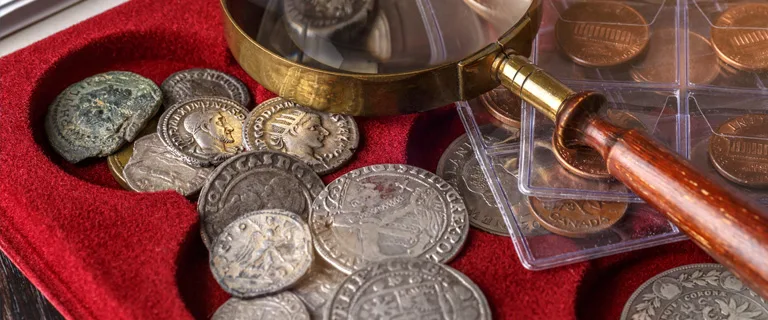
World coins open the door to stories far beyond U.S. borders. For collectors, they offer a tangible connection to ancient civilizations, global trade routes, religious traditions, and pivotal moments in world history. Unlike modern circulating coinage, many international coins were struck to commemorate rulers, faiths, empires, or historic events—making each piece a small artifact of its time.
From ancient Biblical-era coins to shipwreck-recovered treasure and modern bullion issues like Mexican Libertads, world coins reflect how cultures expressed power, belief, and economic influence through money. These coins weren’t just used for commerce; they traveled across continents, passed through countless hands, and played roles in shaping global history.
World coins appeal to collectors at every level. Beginners are often drawn to their variety, affordability, and striking designs, while experienced collectors appreciate their depth, rarity, and historical significance. Unlike many U.S. series, world coins offer nearly endless paths for specialization—by country, era, metal, theme, or historical event.
This guide explores the broader world of international coin collecting. We’ll look at the origins of world coinage, highlight notable categories collectors seek today, and share practical tips for identifying, preserving, and valuing world coins. Whether you’re just starting out or expanding an established collection, understanding world coins adds global perspective—and lasting value—to your collecting journey.
A Brief History of World Coins
The history of world coins dates back more than 2,500 years, when early civilizations sought reliable ways to facilitate trade. The first widely recognized coins emerged in ancient Lydia (modern-day Turkey) around the 7th century BCE, struck from electrum, a natural gold-silver alloy. These early coins set the foundation for standardized money across the ancient world.
As empires expanded, coinage spread through:
- Trade routes, allowing coins to move between cultures
- Military conquest, introducing new monetary systems
- Political authority, reinforcing the power of rulers and states
Ancient Greece and Rome refined coinage into both economic tools and propaganda. Coins featured gods, emperors, symbols of victory, and religious imagery, turning everyday money into messages of authority and belief. Biblical-era coins, such as shekels and Roman provincial issues, offer particularly rich insight into religious and historical contexts that continue to fascinate collectors today.
Throughout the Middle Ages and into the Age of Exploration, world coins evolved alongside global trade. Silver from the Americas fueled international commerce, while Spanish and colonial coins circulated worldwide. Shipwreck coins from this era tell dramatic stories of exploration, trade, and loss beneath the sea.
In more modern times, nations began producing coins not just for circulation, but also for collectors and investors. These issues often reflect national identity, cultural pride, and artistic excellence.
Historical context plays a major role in a coin’s collectibility and value. Understanding where a coin was made, why it existed, and how it circulated helps collectors appreciate not just what a coin is worth—but what it represents in the broader story of world history.
Popular Categories of World Coins Collectors Seek
Ancient and Biblical Coins
Ancient and Biblical coins are among the most historically rich world coins available to collectors. These pieces often date back thousands of years and are closely tied to major religious, political, and cultural events recorded in ancient texts and historical records. For many collectors, owning a Biblical-era coin creates a direct, physical connection to the ancient world.
Common types of Biblical coins include:
- Widow’s mites (often identified as leptons from Judea)
- Tyrian shekels, associated with Temple taxes
- Roman provincial coins, struck during the time of Christ and early Christianity
These coins circulated in regions such as Judea, Samaria, and the Roman Empire, and often feature emperors, local rulers, or religious symbols. Unlike modern coin collecting, condition is not always the primary driver of value for ancient coins. Wear is expected, and historical context often outweighs surface preservation.
Because of their age and demand, authentication and provenance are especially important. Ancient coins are among the most commonly counterfeited categories in the numismatic world. Reputable dealers, documented ownership history, and professional verification help ensure authenticity.
Collector interest in Biblical world coins is driven by:
- Historical and religious significance
- Rarity and limited survival rates
- Direct ties to ancient events and civilizations
These coins appeal to both collectors and historians, making them a cornerstone category in world coin collecting.
Shipwreck Coins
Shipwreck coins capture the drama and adventure of maritime history. These world coins were recovered from sunken vessels, often lost during trade voyages, naval battles, or storms. Many shipwreck coins date to the Age of Exploration, when European powers transported massive quantities of gold and silver across the oceans.
Spanish treasure fleets are among the most famous sources of shipwreck coins. Galleons carrying silver reales, gold escudos, and colonial coinage traveled from the Americas to Europe, supplying global trade networks. When these ships sank, their cargo remained hidden for centuries until modern recovery efforts brought them back to the surface.
What defines a shipwreck coin is not just where it was found, but how it is documented. Legitimate shipwreck coins are accompanied by:
- Recovery certificates or provenance paperwork
- Details linking the coin to a specific wreck
- Professional conservation and authentication
This documentation is essential, as it establishes authenticity and protects long-term value.
Shipwreck coins appeal to collectors for several reasons:
- A tangible connection to exploration and maritime history
- Natural aging and surface characteristics unique to underwater recovery
- Strong crossover interest from both historians and investors
Their combination of scarcity, story, and precious metal content makes shipwreck coins one of the most compelling categories in world coin collecting.
Modern World Bullion & Libertads
Modern world bullion coins play a unique role in international collecting, blending precious metal value with national identity and artistic design. Among these, Mexican Libertads stand out as one of the most sought-after world coins on the global market.
First issued in 1982, Libertads are produced in silver and gold by the Mexican Mint, one of the oldest mints in the Americas. They feature the iconic Winged Victory design alongside the Mexican coat of arms, combining historical symbolism with modern craftsmanship.
Libertads are especially popular because of:
- Lower mintages compared to many global bullion programs
- Frequent design, finish, and size variations
- Limited distribution, particularly in the U.S. market
Unlike standard bullion coins, Libertads often blur the line between investment and collectibility. While they contain intrinsic precious metal value, scarcity and demand can drive premiums well beyond spot price.
World coin collectors are increasingly drawn to Libertads due to growing international demand and the appeal of assembling complete date, size, or finish sets. As global interest continues to rise, Libertads remain a prime example of how modern world coins can offer both long-term value and strong collector appeal.
How to Identify and Authenticate World Coins
Identifying and authenticating world coins requires a careful balance of research, observation, and professional verification. Because international coins vary widely by country, era, and minting standards, collectors must evaluate multiple factors before determining authenticity or value.
Key physical characteristics are often the first indicators to examine. Weight, diameter, and metal composition should align with known specifications for the coin type. Even small deviations can signal a counterfeit or altered piece, especially with ancient, bullion, or high-value world coins.
Next, pay close attention to language, inscriptions, and symbols. World coins often feature unfamiliar alphabets, religious references, national mottos, or rulers’ names. Comparing these details to verified examples helps confirm whether the design matches the correct period and issuing authority.
Mint marks and edge details are also critical. Some world coins include subtle mint identifiers, reeded or lettered edges, or distinctive striking characteristics. Missing or inconsistent edge details can indicate casting, tooling, or modern replicas.
Collectors should be aware of common risks, including:
- Counterfeit coins made from incorrect metals
- Altered dates or added mint marks to simulate rarer issues
- Tourist replicas and reproductions sold without proper disclosure
Professional authentication is strongly recommended for higher-value world coins, particularly ancient coins, Biblical coins, shipwreck coins, and low-mintage bullion issues like Libertads. Third-party experts and reputable dealers provide verification, helping protect collectors from costly mistakes and ensuring long-term confidence in their collection.
Factors That Influence the Value of World Coins
The value of world coins is shaped by a combination of physical characteristics, historical importance, and global market dynamics. Unlike U.S. coinage, international coins often have fewer standardized benchmarks, making value assessment more nuanced.
Rarity and mintage numbers are primary drivers of value. Coins with limited production, high attrition rates, or restricted regional circulation tend to command stronger premiums. In some cases, exact mintage figures may be unknown, further increasing collector interest.
Condition and grading can be challenging with world coins, especially older or non-mechanically struck pieces. Ancient and shipwreck coins, for example, are rarely evaluated by surface quality alone. Wear, toning, or environmental effects may be expected, with historical integrity often outweighing visual perfection.
Historical significance and provenance play a major role in valuation. Coins tied to notable rulers, religious events, trade routes, or documented discoveries—such as shipwreck recoveries—often attract higher demand. Provenance helps establish legitimacy and adds narrative value that resonates with collectors.
Market demand by region or coin type also affects pricing. A coin popular in Europe or Latin America may carry a different premium than it does in the U.S. Similarly, demand for categories like Biblical coins or Libertads can fluctuate based on collector trends.
Finally, global economic and numismatic trends influence world coin values. Precious metal prices, international auctions, and shifting collector interest all impact pricing, reinforcing the importance of staying informed when buying or selling world coins.
Tips for New World Coin Collectors
For collectors new to world coins, the variety and global scope can feel overwhelming—but a thoughtful approach makes the experience both manageable and rewarding. One of the best ways to start is by choosing a clear focus, such as a specific country, historical era, religious theme, or coin type. Narrowing your scope helps build knowledge faster and prevents unfocused spending.
Setting a realistic budget is equally important. World coins range from affordable circulated pieces to high-value rarities, and it’s easy to overspend early on. Define what you’re comfortable investing and leave room for future upgrades as your expertise grows.
Education should always come before purchasing rare or high-risk coins. Learn how to recognize authentic examples, understand basic grading standards, and research common counterfeits, especially when dealing with ancient coins, shipwreck material, or low-mintage bullion. Reference books, auction archives, and reputable dealers are invaluable resources.
Finally, focus on building relationships with trusted dealers. Experienced professionals can provide guidance, alert you to opportunities, and help you avoid costly mistakes. A knowledgeable dealer does more than sell coins. They help you collect with confidence, long-term value, and historical integrity in mind.
Where to Buy, Sell, or Appraise World Coins
When buying, selling, or appraising world coins, working with an experienced and reputable dealer is essential. International coins often require specialized knowledge of foreign minting practices, historical context, and authentication standards that go beyond U.S. coinage.
CV Coins & Collectables brings decades of experience handling a wide range of world coins, including Mexican coinage and Libertads, ancient and Biblical coins, and documented shipwreck material. This expertise allows for accurate identification, fair valuation, and informed guidance at every stage of the process.
Whether you’re expanding a collection or preparing to sell, transparent appraisals and an education-first approach help ensure you understand what you own and why it matters. Trusted dealers don’t just evaluate coins. They help collectors make informed decisions rooted in history, authenticity, and long-term value.
FAQ: World Coins
World coins are coins minted by countries outside the United States. They reflect the history, culture, and economy of their origin and can include circulating coins, commemoratives, bullion, and ancient issues.
Not necessarily, but they often require extra research. Language, mint marks, alloys, and historical context can differ, so beginners benefit from starting with a specific focus, like a region, era, or coin type.
Check weight, diameter, metal composition, inscriptions, and mint marks. High-value or rare coins—especially Biblical, shipwreck, or low-mintage pieces like Libertads—should be professionally authenticated.
Rarity, mintage numbers, condition, provenance, historical significance, and global collector demand all play roles. Coins with documented origins or unique stories often carry a premium.
Reputable dealers, certified auctions, and trusted local shops are the safest options. CV Coins & Collectables specializes in world coins, providing expert appraisal, buying, and selling services.
Conclusion: The Global Appeal of World Coins
World coins offer collectors a unique way to explore history, culture, and artistry from around the globe. From ancient and Biblical coins to shipwreck treasures and modern Libertads, each piece tells a story that extends far beyond its face value. Collecting world coins allows enthusiasts to engage with global trade, religious history, and changing political landscapes while building a diverse, fascinating collection.
The appeal of these coins lies not just in rarity or precious metals but in the rich context each coin carries. Whether it’s the historical significance of a Roman shekel, the adventure of a sunken treasure, or the elegance of a Mexican Libertad, world coins provide a window into cultures and eras across centuries.Explore beyond U.S. coinage and discover the stories these international coins preserve. Visit or contact CV Coins & Collectables for appraisals, buying, selling, or expert guidance to help you start—or expand—your world coin collection with confidence.