
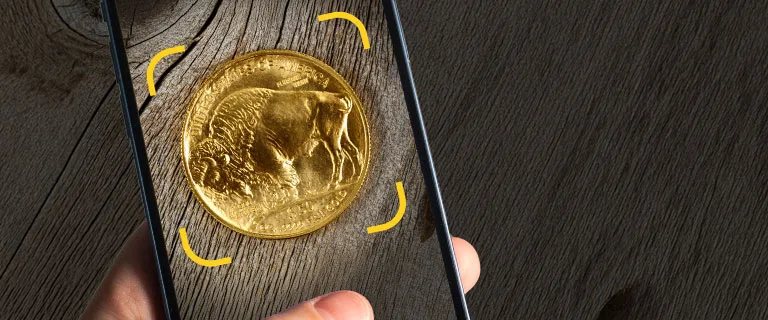

Technology is transforming how collectors identify and research their coins. A decade ago, identifying an unfamiliar coin required reference books, expert consultation, or hours of research. Today, smartphone apps can provide instant identification using artificial intelligence and crowdsourced databases.
But not all apps are created equal. Some deliver reliable information. Others offer rough estimates that miss the mark. Understanding which tools work, when to trust them, and when to seek expert verification separates successful collectors from those who make costly mistakes.
Successful collectors use apps as starting points for research, not final authorities. They cross-reference information across multiple tools. They understand that artificial intelligence has limitations and that human expertise still matters for high-value or unusual pieces. They know when an app can handle the job and when professional appraisal is necessary.
AI Photo Recognition Apps
Artificial intelligence has made coin identification accessible to anyone with a smartphone. These apps use machine learning trained on thousands of coin images to recognize coins from photos.
Coinoscope Overview and How It Works:
Coinoscope uses machine learning to recognize both international and domestic coins from a photograph. You snap a picture of your coin, and the app displays a visual list of similar matches ranked by likelihood. Each match includes estimated values based on current market data.
The app works best when you photograph both the obverse and reverse clearly. Lighting matters. Clear, well-lit photos with the coin filling most of the frame produce more accurate results than dark or distant images. The app handles modern coins more reliably than rare or unusual pieces.
CoinSnap Features and Accuracy:
CoinSnap markets itself as beginner-friendly and lives up to that claim. The interface is intuitive. You photograph the front and back of your coin, and the app instantly pulls up identification data, historical facts about the coin, and real-time market pricing based on comparable sales.
The app excels at identifying common modern coins and well-documented historical pieces. Its strength is speed and accessibility rather than nuance. A 1982 penny or a modern quarter is identified instantly and accurately. A rare early American coin or a variant with subtle differences may produce less reliable results.
Coin ID Scanner for Modern Coins:
Coin ID Scanner specializes in modern change. If you’re sorting through pocket change and want to quickly identify what you have, this app works efficiently. It lets you photograph coins, instantly pulls up identification data, and logs basic specifications like denomination, mint year, and mint mark.
The app is excellent for organizing discoveries and building basic inventories of modern coins. It’s not designed for valuation of rare pieces or detailed numismatic research. Its purpose is speed and organization for everyday coins.
Limitations of AI Identification:
Artificial intelligence has blind spots that matter to serious collectors. Rare coins with limited examples in training datasets may be misidentified or produce uncertain results. Coins with production errors or varieties that differ subtly from standard types challenge AI recognition.
Lighting, angle, and image quality significantly affect accuracy. A poorly lit photograph or one taken at an awkward angle may produce incorrect results. The app might identify a coin as a common date when it’s actually a scarcer variety with substantially different value.
Market pricing provided by these apps reflects estimates based on past sales data. Current asking prices for similar coins may differ significantly from app estimates. Grading assessment is nonexistent. An app cannot determine whether a coin is in poor or excellent condition based on a photo alone, yet condition dramatically affects actual value.
Most importantly, these apps provide preliminary information, not expert authentication. They work well for casual identification and general research. For coins you plan to purchase or sell at significant prices, professional appraisal remains essential.
Expert Databases and References
Beyond AI recognition, serious collectors rely on authoritative databases and reference tools built by experts and maintained with real numismatic data.
PCGS CoinFacts and What It Offers:
PCGS CoinFacts represents one of the most comprehensive free reference tools available to collectors. Maintained by Professional Coin Grading Service, it features high-resolution photo examples graded and authenticated by PCGS experts. You can see what coins at different grades actually look like, which matters immensely when evaluating your own pieces.
The database includes population statistics showing how many examples of each date and mint mark have been certified by PCGS. This data indicates scarcity. A date with 500 certified examples is more common than one with 50. The tool also includes over 3.2 million auction prices realized, showing what collectors actually paid for similar coins at auction.
CoinFacts excels for U.S. coins but has limited information for world coins. The search function is straightforward. You select denomination, date range, and variety, and the tool displays relevant information instantly.
Numista for World Coins:
Numista takes a different approach. It’s a massive, crowd-sourced digital catalog ideal for identifying world coins from virtually any country and era. Collectors worldwide contribute data, photographs, and information about coins in their collections.
Numista works particularly well when you have a coin from an unfamiliar country or older period and need basic identification. The database is extensive, and community contributors provide detailed information about production runs and varieties. You can also track your personal collection and connect with other hobbyists for trading.
The crowd-sourced nature means information quality varies. Some entries are meticulous. Others lack detail. Cross-referencing information across multiple sources remains wise when using Numista.
How to Use These Tools Effectively:
Successful collectors use PCGS CoinFacts and Numista as research starting points. They check population statistics to understand scarcity. They examine graded examples to calibrate what high grades actually look like. They review auction prices to understand market values.
The key is cross-referencing. If PCGS CoinFacts and Numista both confirm the same identification and provide similar valuation ranges, confidence increases. If information conflicts, additional research becomes necessary.
Accuracy and Reliability:
PCGS CoinFacts maintains high accuracy because Professional Coin Grading Service controls the data. Expert staff verifies information. The tool is reliable for U.S. coins and basic world coin identification. It becomes less reliable when you venture into obscure world coins or pre-modern issues outside common collecting categories.
Numista’s accuracy depends on community contributions. Major coins and popular collecting areas have reliable, detailed information. Obscure pieces or those with limited collector interest may have sparse or incomplete data. Always verify important information through multiple sources.
Real-Time Valuation Tools
Beyond apps and databases, collectors need access to current pricing information. eBay sold listings provide the most accurate, real-time indicator of what buyers are actually paying for specific collectibles.
eBay Sold Listings as Price Guides:
eBay’s sold and completed listings show actual transaction prices. Unlike asking prices, which may be inflated, sold prices represent what collectors genuinely paid. When you search for a specific coin on eBay and filter to show only completed and sold listings, you see real market activity.
This data cuts through speculation. A dealer might ask $500 for a coin, but if identical examples are selling for $300, that’s the actual market value. eBay provides this reality check instantly.
Why Completed Sales Matter:
Asking prices are aspirational. Completed sales are factual. A seller might list a coin at an inflated price hoping for an optimistic buyer, but if no one purchases it at that price, it tells you something important about market reality. Completed sales show what the market actually values something at right now.
eBay sales data includes both professional dealers and individual collectors. This mix provides a realistic picture of secondary market pricing across different seller types and price points.
How to Interpret Pricing Data:
Multiple sales of the same coin at similar prices indicate consensus value. If five examples of a specific date and mint mark sold within a $20 range, that’s meaningful data. If one sold at $100 and another at $500, something differs between those coins, likely condition or grading.
Pay attention to shipping costs and auction fees. A coin selling for $150 plus $10 shipping and $15 in fees actually costs the buyer $175. Factor these costs when using eBay data to estimate true market value.
Limitations of Online Pricing:
eBay pricing reflects current demand but can be skewed by individual transactions. One unusually high sale doesn’t represent typical market value. One desperate seller accepting below-market prices doesn’t either. Look for patterns across multiple sales rather than relying on single transactions.
Professionally graded coins command premiums over raw coins. A PCGS-certified coin sells for more than an ungraded example of the same coin. Don’t directly compare these prices. Adjust expectations based on certification status.
Organization and Tracking
Serious collectors need systems to organize their collections, track value, and monitor market changes.
Spreadsheet Systems for Collections:
Many experienced collectors prefer Excel or Google Sheets to build custom itemized inventories. Spreadsheets offer flexibility that apps don’t provide. You can create columns for denomination, date, mint mark, grade, purchase price, current estimated value, and notes about condition or variety.
Spreadsheets work particularly well for large collections spanning multiple categories. You can sort by type, date, grade, or value. You can calculate totals, track growth over time, and identify gaps in your collection.
Why Collectors Prefer Custom Tracking:
Off-the-shelf inventory apps often lack customization. They may not accommodate varieties you collect or note the specific details you care about. Custom spreadsheets let you track exactly what matters to your collection.
Spreadsheets also provide privacy. You control your collection data. You’re not relying on third-party cloud services or apps that might change, shut down, or access your information.
Building Your Own Inventory System:
Start simple. Include basic information: coin type, date, mint mark, grade, and acquisition price. As your system matures, add estimated current value, acquisition date, and notes about provenance or unique characteristics.
Update values periodically by checking market data. This reveals trends in your collection’s total value and identifies pieces that may be appreciating or declining in value.
Calculating Melt Value:
For precious metal coins, spreadsheets shine. You can input the coin’s composition, weight, and current spot prices for gold, silver, or other metals. Create formulas that automatically calculate melt value based on current spot prices.
This tracking matters for coins you might sell. Knowing the melt value floor helps you understand minimum value regardless of numismatic factors. It also reveals when metal prices move significantly, affecting your collection’s total value.
Frequently Asked Questions About Coin Identification Apps
No. Apps provide preliminary information but shouldn’t be your only resource for selling decisions. Use apps to start research, then verify with multiple sources and consider professional appraisal for high-value pieces.
Numista excels for world coins due to its comprehensive international database. For U.S. coins, PCGS CoinFacts provides superior accuracy and detailed reference information.
App estimates serve as rough guides but shouldn’t dictate buying or selling decisions. They lag actual market conditions and can’t assess individual coin condition. Always cross-reference with current eBay sold listings for more accurate pricing.
For coins you suspect are rare or valuable, professional grading through PCGS or NGC provides authentication and increases marketability. For common coins, grading costs typically exceed the value added.
Authentication confirms a coin is genuine. Grading assesses condition on a standardized scale. Professional services typically provide both simultaneously through certification.
Apps cannot reliably identify counterfeits. They can misidentify a fake as genuine if the image quality is sufficient. Suspect counterfeits must be examined by experts who can assess weight, dimensions, metal composition, and strike characteristics.
Review estimates quarterly or when precious metal prices shift significantly. Major market changes can affect collection values substantially. Spreadsheet formulas that track spot prices make this process automated.
Conclusion
Coin identification apps and databases have democratized numismatic research. What once required library visits and expert consultation is now instantly accessible from your smartphone. Coinoscope, CoinSnap, PCGS CoinFacts, and Numista each serve valuable purposes when used appropriately.
The key is understanding their strengths and limitations. Apps excel at identifying common coins and providing starting points for research. Databases offer authoritative reference information and pricing data. eBay sold listings reveal actual market values. Spreadsheets track collection details efficiently.
But these tools enhance rather than replace expertise. Professional appraisers, experienced dealers, and certified graders provide services that technology cannot fully replicate. The smartest collectors use apps for preliminary work, then consult experts when it matters most.
Whether you’re a casual collector sorting pocket change or building an investment-grade collection, these identification tools accelerate your research and improve your decision-making. Use them wisely, cross-reference results, and know when to seek professional guidance.
Visit CV Coins & Collectables today to discuss your collection or get an expert appraisal on coins you value most.